Chaodis (Nation)
'Tella Ein Eterna zoz Caserteilac'

Chaodis Empire
Chaodis Republic
General Information
| Imperial | Chaodis |
|---|---|
| Offical Language | Chaodic Pupatorian (Language) |
| ---- | ---- |
| Demonym | Chaodis |
Government
- Federal Government Classification:
- Theocratic Pseudo-Corporatocracy
- Casrteilayn
- 14 Socyetas by Divine Right:
- Caserteilac Eterna
- Giefu Cathedrasilicom
- Caserlic Custodayn
- Harvestella Caydreabh
- Disith Fynanzen
- Hexes' Socyetas
- Omikyrie Aegys
- Pupatory Commercyum
- Ulysses Fabrykatios
- Flugelia Lapycdina
- Leglius Akademiel
- Infel Loidsystic
- Nestmillia Typoimpresson
- Welnoah Gewyrht
- 14 Socyetas by Divine Right:
Other Information
Currency: Akudya
Time Zone: Western Wasaru Time/Eastern Wasaru Time
Overview
Chaodis were an ancient civilization that is widely considered to be one of the oldest, if not the oldest, civilizations in Utopia. Dated from 9000 BC - 1 AD. While there are artifact evidence of the Chaodis Empire dates back to 9000 BC, the continuity of its dynasty is debated. It is widely believed that the Chaodis Empire was destroyed by the Great Flood in 2,000 BC. Due to its secluded location, the Chaodis civilization developed culturally different from other Wasaruan civilizations.
Chaodis Republic was the Era of Classical Chaodis civilization, beginning in 800 BC and ending in 1 AD. During this period, Chaodis control expanded from Chaodis’ surroundings to a hegemony over the entire Chaodic Bay, laying the foundation for future Puptory.
The Chaodis Republic was known for its technological and societal advancements. The Chaodis Republic was not a democracy, nor a complete autocracy. Scholars argue the Chaodis Republic may have been the oldest corporatocracy in history, achieving pseudo-capitalism at its peak of power. The Caserteliayn, the divine monarch assigned 14 mandates to the 14 Socyetas, or comapnies who hold exclusivity over the industries of their fields.
History
Chaodic Mythical Era: 9,000 BC - 2,000 BC
The Chaodis Empire was described by multiple religious texts to be a civilization founded in the region of modern-day Edokyuuria. Pupatorian text implied the Chaodis Empire was inhabited by both humans and ocean deities during the mythical era. The exact size of the empire is debated. However, Chaodic ruins are found in places as far as the modern Miotia-Candorian border.
According to the Pupatorian Cathedrasilicom, Harman Catholic Church, and other Nekht artifacts, the Great Flood happened in 2,000 BC. According to Cathedrasilicom text, a great tsunami destroyed the Chaodis civilization because the humans of Chaodis chose to distance themselves from the Abyssal deities. In Christian myth, God chose a man named Len ainh, and he would build the Kivotos, Ark to survive the flood with animals. The Ark would make it to modern-day Minervaindexca. Making it the holy land of Holy Uyna.
Rise and fall of the Second Chaodis Empire: 2,000 - 800 BC
The remnants of the Chaodis Empire rebuilt their civilization in the city of Pupatory, west of their former capital, in 1,000 BC. Most city states of the remnant Chaodis civilization had developed a feudal system plagued by civil wars. By 825 BC, the Second Chaodis Empire had mostly been reunified under the Imperial divine authority once more. To further weaken its last enemies and to purge corrupted nobles. The Caserteilayn(Imperator) commanded the Caserteilac Eterna, the Caserteilayn’s personal military, and stripped existing nobility of their powers, promised the common right to profit, abolished slavery, and established 14 divine mandates assigned to the guilds and major organizations of the state. The guilds that carried these mandates had an exclusive monopoly given by the divine. This action attracted civilians of the enemy states to rebel and resulted in full reunification in 810 BC. Under the new system, the Chaodis Republic was established.
Early Chaodis Republic: 800 BC - 328 BC:
During the early years of the Chaodis Republic, the guilds failed to meet standard production of products. The quantity and quality would often differ from one craftsman to another. However, state institutions such as the military and the bank managed to overperform with the removal of the old feudal system. The Leglius Akademiel school failed to meet the criteria set by the Caserteilayn to increase the literacy rate for the next 500 years. This was due to the reliance on wax tablets and papyrus, which were expensive to produce. Despite early failures, the new system attracted traveling merchants and scholars to settle in Chaodis due to the ability to climb the social ladder into these so-called Socyetas, or in modern terms, companies. Senates were created inside each Socyetas to manage different branches of the company.
The 500 years of peace would end when the Nagy Pecs from a foreign land of the east invaded. However, the Socyetas did survive during and after the invasion, and continued their operation during the short rule of the Pecs. From the foreign goods the Nagy Pecs brought back into the economy, Nestmillia Typoimpresson, one of the Socyetas managed to invent bamboo slip domestically by harvesting the abundant bamboo in the North Kjanuan region. During this time a notable traveling cartographer began to show in history's record. Her name is Tyamamo or Tamamo, she is known for mapping the Chaodis Republic during the Nagy Pecs' rule.
High Chaodis Republic: 299 BC - 240 AD
The Nagy Pecs did not manage to fully control the decentralized Socyetas inside the Chaodis. The Omikyrie Aegys would often provide intel to freelance assassins to weaken the Nagy Pecs' administration.
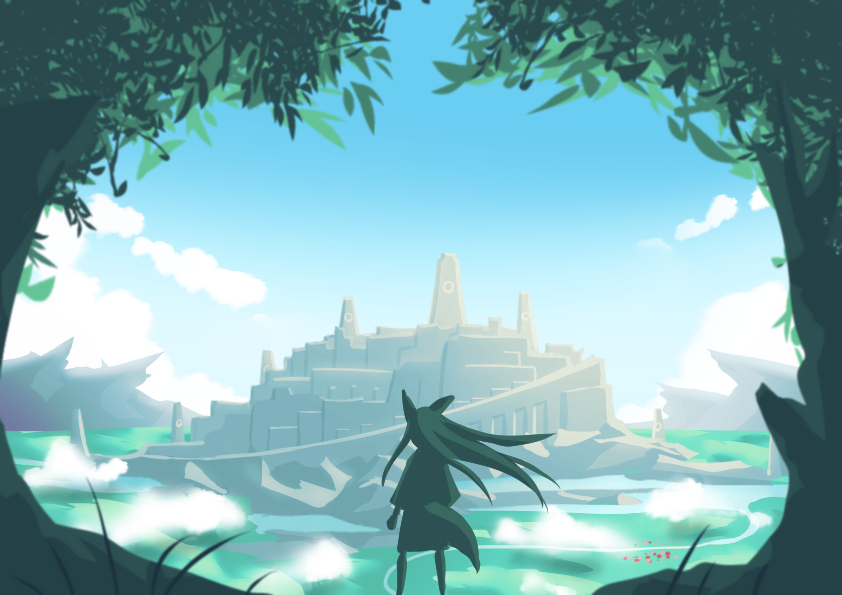
In 299 BC, the Socyetas overthrew the Nagy Pecs’ rule and restored the Republic. Seeing the bamboo slip’s potential, the Nestmillia Typoimpression and the Leglius Akademiel collaborated and invented the printing press in 295 BC by using seals of the Chaodic Alphabet. This is considered the greatest invention in the history of the Chaodis civilization, and many considered this to be the start of the golden age of Chaodis.
By 240 BC, with only half a century, the Chaodis Republic had achieved a stunning 30-35% literacy rate, suggested by graffiti on urban walls. The Hexes’ Socyetas became early forms of journalist industry, and the Infel Loidsystic began a bamboo slip’s postal service for civilians. The Pupatory Commmercyum saw an increasing employment rate with development in mathematics related to business. Ulysses Fabrykatios and Welnoah Gewyrht developed construction blueprints. Business was faster and faster due to the mass production of bamboo slips and the printing press. It was a Renaissance for the Chaodis Republic,
Late Chaodis Republic: 120 BC - 1 AD
With the Socyetas power growing larger and larger, and products being more and more standardized. The Caserteilayn’s power started to diminish. The Giefu Cathedrasilicom, a Socyetas that managed treaties, administration, and the Cathedrasilicom over the Republic, slowly grew to become the face of the central government in 120 BC.
Cracks began to show in the Republic as the Socyetas became more corrupt in 115 BC, as faith and respect toward the divine mandates were forgotten in favor of profit. Along with the acceleration of business by bamboo slips, the Hexes’ Socyetas news focused on gossip about Socyetas. Production Socyetas raised prices more and more, as they were an exclusive business. Some Socyetas would begin to expand into businesses outside the 14 designated industries. The Giefu Cathedrasilicom also permitted the existence of Socyetas conflicts as long as no civilians were harmed. It reqiures and oversight of the Caserlic Custodayn.
The last century of the Chaodis Republic was met with instability despite impressive technological advancements. In 15 BC, the Caserteilayn was assassinated, but neither the Giefu Cathedrasilicom nor the Caserteliac Eterna pursued an investigation. Leaving the throne to a young inexperience princess.
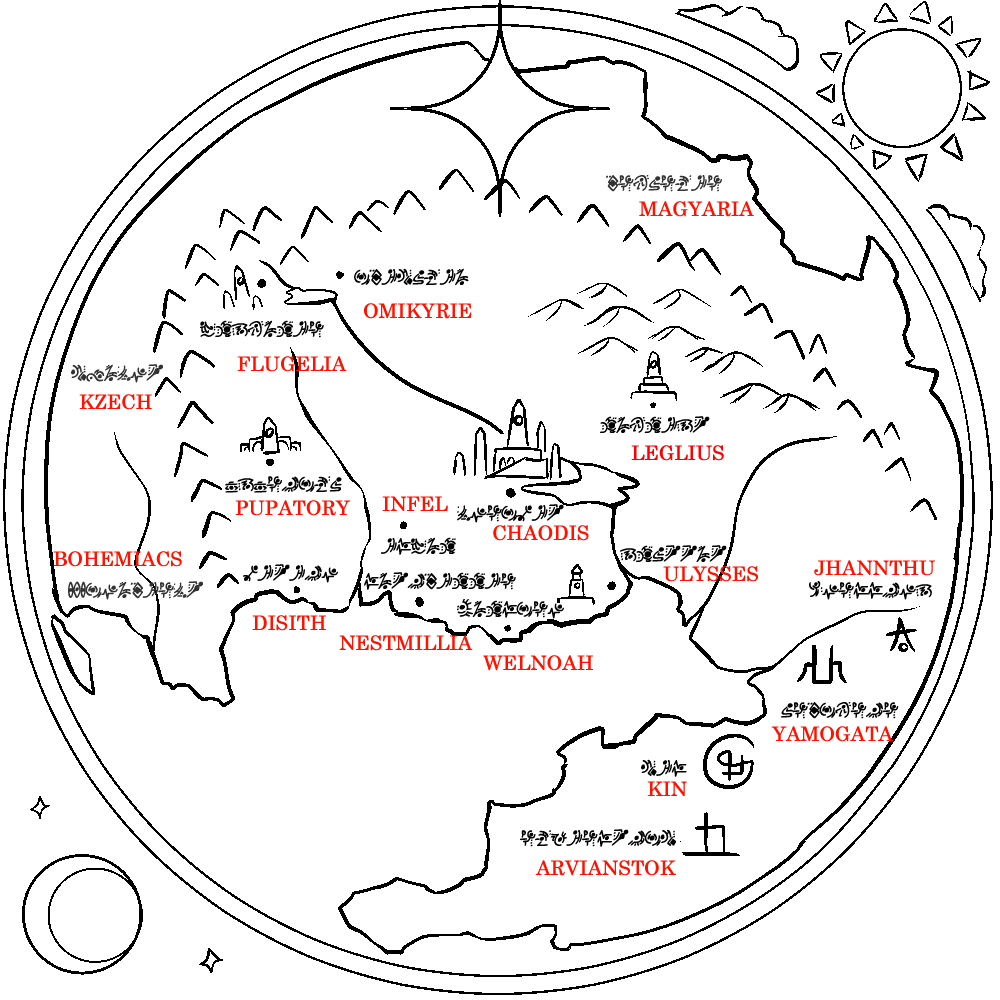
When the young princess took power and became Caserteilayn in 1 BC, she attempted to use her authority to reset the pricing of consumer goods to affordable levels. However, this was met with resistance among the Socyetas led by the Pupatory Commercyum. Not before long, Pupatory Commercyum managed to ally with the Disith Fynanzen, who held the mandate of the bank. This initiated a civil war between the Caserteilac power and the Socyetas. Initially, the Caserteliac Eterna and the Giefu Cathedrasilicom sided with the Caserteilayn. But when Giefu Cathedrasilicom declared the young princess was unfit to rule over the 14 divine mandates, all 14 Socyatas went against the Imperial power. Only a small part of Caserteliac Eterna sided with the Caserteliayn. It is unknown what happened at the end of the civil war.
The siege on the Imperial capital of Chaodis was interrupted by an unprecedented natural disaster that destroyed the entirety of the Chaodis civilization. Scholars agreed it involved a 9.1 earthquake. The destruction and death was biblical, and it still is unknown what type of natural disaster resulted in Chaodic ruins buried 800m underneath the upper surface of the region.
Most of the technological achievements were destroyed and forgotten during the calamity of 1 AD. The literacy rate had regressed to 1-2%. The successor state of Pupatory had returned to feudalism in the following century.
System of the Republic
The Chaodis Republic functions as a theocratic-corporatocracy. The Caserteliayn is the divine monarch who assigned 14 mandates to the 14 Socyetas, who hold exclusivity over the industries of their fields. Socyetas are equivalent to companies. Each Socyetas has its own senate, and elections are held within the Socyetas. However, only employees who were promoted to certain positions are allowed to be candidates for the senate. Decisions of Socyetas are decided through an democratic process in the senate. Shares and stocks also exist during the High Republic Era.
The Caserteliayn’s were seen as divine for most of the Republic’s existence; however, the ruling power gradually shifted to the Giefu Cathedrasilicom, which had taken over legislation and overseeing Socyetas laws.
The 14 Socyetas were given ceremonial seals that resemble chess pieces to prove their divine right to exclusivity in the business.
Caserteliac Eterna (Eternal Imperium) {King}
The federal military Socyetas of the Caserteliayn, they are in charge of defending both the Caserteliayn and protecting the Chaodic realm. They are usually stationed in the Imperial Palace and the fortress on the border. The Caserteliac Eterna was one of the two companies that were not allowed to participate in Socyetas conflicts.
Giefu Cathedrasilicom (Grace Cathedrascilicom) {Queen}
The Socyetas of the Cathedrasilicom. The legislation, inquisition, and the religious administration. The Socyetas that acts in the Caserteliayn’s place to govern the Chaodic realm. They are in charge of administering laws and mediation in conflicts between companies. The Giefu Cathedrasilicom administration has a capable inquisition that rivals the Caserteliac Eterna. While the Caserteliac Eterna was not protected from Socyetas conflicts, no other companies had ever challenged their rule.
Caserlic Custodayn (Imperial Wardens) {Rook}
The law enforcement Socyetas that usually works under Giefu Cathedrasilicom. The Caserlic Custodayn was one of the two companies that were not allowed to participate in Socyetas conflicts.
Harvestella Caydreabh (Agricultural Federation) {Knight}
The largest Socyetas, they are in charge of agricultural products all over the Chaodic realm. It was also the Socyetas that had been at the center of most Socyetas conflicts. This was due to their corrupt nature and ever-rising food prices. The Harvestella Caydreabh was the first Socyetas to be publicly traded and expanded their business into fields that did not have exclusivity by the mandate, such as regional private security.
Disith Fynanzen (Disith Finance) {Bishop}
The Socyetas that was in charge of all banking in the Chaodic realm. Their rapid expansion only began after the bamboo currency of Akudya became common.
Hexes Socyetas (Witches’ Association) {Witch}
The Journalist Socyetas, and the media. The Hexes Socyetas was in charge of spreading news among towns and cities. It is noted that the topics they cover are inconsistent. This is due to the Hexes Socyetas’ decentralized nature. Journalists are known as witches, due to their work being similar to gossip that would damage other Socyetas reputation.
Omikyrie Aegys (Omikyrie Aegis) {Pawn}
The smallest Socyetas among the 14. The Omikyrie Aegys is a Socyetas that trades intelligence and provides personal private security services.
Pupatory Commercyum (Pupatory Trading) {Knight}
The Socyetas that was in charge of introducing logistics solutions and business opportunities to other Socyetas and foreign merchants.
Ulysses Fabrykatios (Ulysses Fabrication) {Pawn}
The second-largest Socyetas, they were formed from many craftsman guilds. They are in charge of manufacturing tools, weapons, armor, textiles, vehicles, and most importantly, bamboo slips and wax tablets.
Flugelia Lapycdina (Flugelia Quarry) {Pawn}
The Socyetas that was in charge of the Quarry and lumber, selling raw materials to other Socyetas.
Leglius Akaemiel (Leglius Academy) {Witch}
The federation of schools within the Chaodic realm. They are responsible for many technological advancements. They work closely with the Hexes Socyetas and the Nestmillia Typoimpression to raise the literacy rate of the Chaodic population.
Infel Loidsystic (Infel Logistics) {Pawn}
The postal and logistical service for everyone. Civilians and Socyetas rely on them to transport goods and information. The Hexes Socyetas relies on them to transport bamboo slips across the Republic to spread news.
Nestmillia Typoimpresson (Nestmillia Printing) {Rook}
The ancient printing press of the Chaodic realm. In collaboration with the Leglius Akademiel and the Ulysses Fabrykatios, production of ancient printing machines was made possible with alphabetical seals. They print on wax tablets, papyrus, and bamboo slips. Arguably the most important and technologically defining industry of the Chaodis Republic.
Welnoah Gewyht (Welnoah Construction) {Pawn}
The Socyetas that was in charge of construction work across the Republic. They work closely with the Flugelia Lapycdina, even having exclusive deals in buying raw materials.
Culture
Chaodis civilization is named after their deity; it is a theocratic society that worships the primordial god of the stars, chaos, and potential, Chaodis. The Caserteliayn is believed to be the descendant of Chaodis and Cycillius, the ocean deity, who was said to have destroyed the Chaodis Empire and caused the great flood. The Cathedrasilicom manages ceremonies and festivals all across the realm; all festivals are deeply tied to the mythology of Chaodis. Local traditions were either extinct due to lack of funding or absorbed by the Cathedrasilicom. The Chaodis Republic had a 14-day week, based on the 14 mandates. The population worships the Chaodis god once every 14 days in the local Cathedrasilicom, usually on the 14th day of the week. The Chaodis Republic used a tetradecimal system for mathematical calculations due to their faith.
While an official Socyetas, the population of Chaodis was not fond of the Hexes Socyetas due to their line of business. Journalists were called Witches for bringing unwanted truth, ruining local business, livelihood, and social relations. The Witches of Chaodis did not deal in the occult but in information.
The Cathedrasilicom directed the construction of giant obelisks for the burial of saints and royalty. These structures can be found throughout the Chaodis Republic. During the early period of the Republic, the architecture relied on heavy marble and stone walls as support. In the High Republic era, skeleton gothic-like architectural designs were introduced to allow for high ceilings and a more efficient method of using construction materials.
Provided by PasutaFukurou(User)