Feng Dynasty (Nation)
The Exalted Imperium of Feng Dynasty
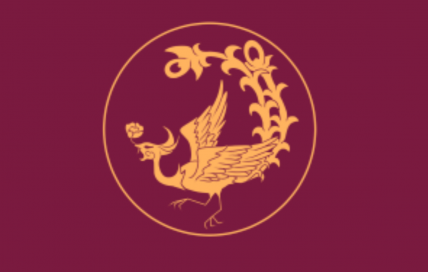
General Information
| Capital | Taijing |
|---|---|
| Secondary Capital | Donghai |
| ---- | ---- |
| Official Language | Yaoiese |
| National Language | Yaoiese, Mandarin, Cantonese |
| ---- | ---- |
| Demonym | Fengese |
Government
- State Government: The Imperial Court
- Emperor: Empress Taihe
- Prince Consort: Abraham Stargazer
- The Imperial Council (Legislation)
- Central Secretariat
- Chancellery
- The Imperial Cabinet (Executive)
- Prime Minister
- Minister of Works
- Minister of Taels
- Minister of War
- Minister of Justice
- Minister of Diplomacy
- Minister of the Court
- The Imperial Judiciary (Judicial)
- The Court of Final Appeal
Economic Data
| Year | GDP |
|---|---|
| GDP (nominal) | 196.59 Trillion / 39.317 trillion USD |
| Per Capita (nominal) | 149,200 Taels / 29.840 USD |
Other Information
Establishment: 1412 AD
Currency: Tael (兩)
Time Zone: Eastern Wasaru Time
Drives on the: Left
Calling code: +888
Internet TLD: .com
Structure and Related Entities
- Imperial Feng
- Huazheng
Summary
Penned by Scholars of the Imperial Academy
In the south of the Wasaruan land lies the heart of a most charming dominion. Tis a prestigious and powerful centre of culture and trade, as well as the beating heart of a dense web of diplomacy. And what would the name of this realm be? One would know the answer if they didn’t live beneath a boulder: tis the Exalted Imperium of Feng Dynasty, or simply the Fengese Imperium. It’s gilded wing stretches from Jingyang in Southern Wasaru to Huazheng in Dissopoloforia. In all it is bordered by Persia and Solaire in the north, UKMC-Kjanu and East Lismore in the south, Rikura in the west, and the Fengese Sea in the east. The thirteenth Dynasty of the Hua civilization inherited a culture of eight thousand years with the wisdom of sages past. It is this wisdom that ensured its impressive eminence despite its weaker armies. With protection from its powerful economy and diplomatic encouragement, Feng is proof that a great nation needs not the bloody blade to succeed.
The Feng Dynasty is a federated absolute monarchy ruled by the Imperial Court in the capital, and the Branching Courts in each province. The government as a whole is dominated by Empress Taihe (of course) and two groups: the hereditary nobility and the legalistic scholars. The nobility hold most of their power in the provinces while scholars hold powerful positions in the central and provincial government. The two have reached a position of political equilibrium with neither more powerful than the other, and it has become the Empress’ duty to maintain such equilibrium. Feng is held to be the nation of abundance and the wealthiest of all sovereignties. Fittingly, the Fengese Imperial Family holds status as the world’s first and only trillionaire family at present (as calculated by the disgruntled economists of Fronbridge Oxvard). Their language, Yaoiese or Yuezhong (粵中), is many thousands of years old and is a marker for the great age of their culture.
Etymology
The Exalted Imperium of Feng drips with meaning. Feng means Phoenix in Yaoiese, so named for the Fengwood (phoenix trees) the imperial family sold as nobles. The names of the dynasty, land, and civilisation have been received by much confusion and it must be clarified that Feng is the name of the nation and dynasty, Jingyang the name of the physical land it resides in, and Hua the name of the dominant civilisation and culture in the region. To Yaoiese speakers, it is known as Da’Feng (大鳳) or Great Feng. “Great” Is a prefix for any single dynasty that unites Jingyang. Though many states have claimed such a prefix, Feng has certainly earned theirs through the six hundred years they’ve reigned.
Geography and Climate
Feng Dynasty resides in Southern Wasaru and is in majority made up of a continental climate. This climate was concentrated in Zhongyuan province, held to be the cradle of the Hua civilisation. Beizhou in the north was arid and cold owing to the slope downwards from the Solarian highlands and Zhangjie in the south was hot and tropical owing to hot moist winds and warm ocean currents. A vast expanse of dry grasslands forms Xisheng while in Beifeng, a desert environment can be seen owing to their proximity to Persia. Dahua province was humid and subtropical, filled with limestone cliffs. The geography of each province will be broken down below.
Zhongyuan
Zhongyuan (中原) is the cradle of the Hua and is dominated by a cycle of flame and rebirth, famously intertwined with the area’s Fengwood forests. This process is named the Cycle of Renewal and is based on one of the Hua’s integral principles: Yin and Yang. During Yin, life flourishes and grows and Fengwood trees stretch to unparalleled heights. Life unchecked would destroy itself, thus an external source of destruction is needed to balance it: this occurs in Yang through wildfires that burn through such forests. The understory, waste, and aged trees burn away to leave room for new growth. This cycle is believed to occur within a span of a season and has influenced the ecology of everything in Zhongyuan. Many flora relied on such fires for their reproductive cycles. These fires often occur during the extended dry period in autumn, a characteristic of the continental temperate climate Zhongyuan has.
Zhongyuan is in majority flat (as obvious from its name, meaning middle plain) and comprised of either plains forests, or river valleys both flowing and dry. It also contains the two longest rivers of Jingyang: the Flaming River in the centre and Golden River in the north. Zhongyuan is overall the most urbanised area with the most population concentrated within, densely packed into its cities. Notable flora and fauna are listed below:
Fengwood
Fengwood, natively known as Fenghuangmu (鳳凰木), means Phoenix wood for its blazing red and gold leaves in autumn. Fengwood is well known for its fire resistant nature owing to its secretion of sap that protects it from cyclical autumn fires. These fires are also essential to their reproductive cycles as their seeds may only be activated and released in fires. Fengwood has been very popular in architecture due to its fire resistant nature, strength, and density, and has always been historically used. The most prominent grower of such trees is the Hong noble family (洪), who’ve been a dominant exporter for a thousand years. The Hong would go on to become the Imperial Family of Feng Dynasty, naming it Feng for the phoenix trees that gave them their power.
Fengwood is normally tall with branches well away from the ground and safely out of reach of fire.
Phoenix
Phoenixes (鳳凰) were historically native to Zhongyuan, being the namesake of Fengwood where they nested in the wild. They have since grown rare in the wild and are mostly seen in their domesticated form: the Imperial Phoenix. These have fiery gold-red feathers with an enormous train of tail feathers which mirror the trailing robes popular with the elite, whereas wild phoenixes have more modest colours and tail feathers. The most famous characteristic of phoenixes is there regenerative abilities. After a period of time, phoenixes “moult” where they lose their feathers in a fire-like rain (creating the saying: reborn like a phoenix from the flame). This process is still little understood, but allows them to live for a few hundred years until their organs fail on their own.
Phoenix milk has been believed to possess such restorative effects for humans, fed to chicks who cannot yet restore themselves. A secret recipe to make this usable for humans is currently held by the Imperial Family, who use this to keep their youth and beauty beyond the age these expire. This is of course all rumour and belief for it is still not yet proven that phoenix milk or any part of them can restore human ageing. The phoenix flew inefficiently even in the wild and only do so to fly into their Fengwood nests, high above the ground beyond the reach of fire. They’re about the size of peafowl.
Long
The Fengese Long is honoured as a dragon in historic Jingyang. It is snake-like and three to four metres in length with iridescent blue or green scales that turn pearlescent in the mating season. Most common in the waterways of southern Zhongyuan, it is semi-aquatic and serpentine with a distinctive mane around its head. Their impressive antlers are used for show and fighting when the mating season comes about. Longs are most well known for its Dragon Pearls, extremely hard and pearly eggs. These are worth much more than clam pearls due to their much larger size. Unfertilised eggs are often used to decorate homes as they do not lose their lustre and reportedly shimmer in the dark.
The saying goes that where the dragons assemble, rain falls. Dragons gathered before rain to perform mating rituals as it falls, leading to many worshipping them as rain gods in far ancient times. Now they are prestigious pets for the elite wealthy enough to domesticate them. They are iconic symbols of Donghai.
Beizhou
Beizhou (邶州) is a harsh land named for the Kingdom of Bei that first ruled the region. The historic homeland of the Manzhu peoples, Beizhou is a cold grassland and almost never rains. It is thus home to very hardy ecosystems. This includes rare medicinal plants growing only in the region which Dynasties have always found extremely valuable. It has always been a hard time harvesting these, or setting foot in Beizhou at all due to its coldness. When winter came, winds blew from the north into Zhongyuan which gave its top half a taste of their cruel winters. In all, Beizhou is mostly set upon a high sloped plateau with desert occupying a smaller section of the north-west. The Golden River around the plateau’s base into the capital. It’s flora and fauna include:
Qilin
A Qilin (麒麟) is sometimes nicknamed the Windstag, flying for its great speed and stag for its antlers visible on male species. Hailing from Beizhou, it was spread throughout Jingyang for its speed and strength and was the primary mode of transport before the arrival of cars. Despite the name, it is a species of goat with such impressive antler-like horns. Their face is notably dragon-like but with thinner manes and antlers that bend backwards for a streamlined appearance.
The Qilin are clad in long fur and come in shades of brown or black, with white ones being the rarest and used to pull imperial carriages.
Renshen
The Renshen is an unassuming plant in Beizhou with thick roots that resemble a human form, causing foreigners to nickname it the Mandrake. The Renshen was what makes Beizhou the centre of quarrel: it only grows there and is valuable for its medicinal properties. It’s neuromodulating and antioxidative nature makes it prescribed for Parkinson’s disease, Alzheimer’s, Huntington, and Brain Ischemia. It has also been used for sexual dysfunction in men, having rumoured to bless the infertile Emperor Xianhui of He Dynasty with a son.
Zhangjie
Zhangjie (張界) is the southernmost province of Feng and also the most tropical of all. It is Feng’s food basket as 70% of imperial crops come from its fertile farms. Zhangjie is almost entirely composed of limestone hills and flat wetland, being either rainy or overcast all year around. This geography and climate extends beyond Zhangjie’s borders and ends at Donghai, which stands at a transitional environment between that and Zhongyuan plains. The third major feature are rice paddies and other farms that feed the Fengese population and beyond. This is a landscape loved by artists Hua or foreign, with its flocks of cranes and poetic limestone hills. Notable flora and fauna are as follows:
Drunkard’s Lotus
The Drunkard’s Lotus, or the Fool’s Lotus, is a plant symbolic of Zhangjie. It is an aquatic plant with soft pink flowers notably coveted by nobles and historic Gertbland, known as Zuilian in Yaoiese (醉蓮).
The Drunkard’s Lotus bears flowers that creates wine held to create a heavenly sensation of bliss. Such wine is named Summerwine, as it is drunk with fruit juices in summer.
Rumour has it that if the Lotus fruit is cooked and treated a very certain and secret way, it creates Lotus Elixir: a mysterious substance instilling unparalleled blissful apathy, whilst weakening the drinker’s will to be manipulated with ease. Such rumours are currently declared unfounded by the government.
Black Tortoise
The Black Tortoise is among the longest lived of animals with an impressive lifespan of two centuries recorded. They are a symbol of wisdom due to their overgrown shell and beard-like hair that grows from their faces. They grow to about a metre in size.
These days the Black Tortoise has grown rare from being hunted for “Turtle Shell Stew”, a delicacy and staple in many southern banquets. Hunted to the edge of extinction in 1989, they have since become a protected species in the wild. This resulted in Black Tortoise farms appearing to fulfil demand.
Dahua
Dahua (答花) is a province in the south-west that’s filled with jagged limestone karsts. Its land is horribly infertile but contains some of the richest deposits of minerals and metals in the world. Dahua means “answering flowers”, and is named after a legend of ten thousand blossoms blooming in answer to the celestial emperor’s arrival. Dahua is today the centre of Feng’s rare earth production with its prestigious mines in the west. Dahua’s climate is mild and humid due to the many rain-laden clouds that pass through the region.
Peach Blossom
The Peach Blossom, or Taohua (桃花) is a flowering tree that produces both beautiful pink flowers and luscious pink fruit. A popular ingredient in summerwine, it is featured extensively in religious texts as bearers of the fruit of immortality.
Peach blossom trees originally grew in Dahua and spread all over Jingyang due to their popularity. They are noted to be diminishing in their native region though they’ve flourished elsewhere. Their reach even stretches to Altikar, who treasured it in their palaces past.
Xisheng
Xisheng (西省) is a harsh land like Beizhou, albeit less inaccessible. It is a hot, dry grassland that has been called the Corridor, owing to the fact that it is the easiest path to cross into Jingyang’s centre from the west. Xisheng only has one city as the region is dominated by Altan Khanates, who govern the region with the noble in Yuezhou (月州, the provincial capital). Xisheng is some of the flattest land in the world save for more rugged terrain in the province’s south. It is famous for its moving tented cities which are gradually, but surely disappearing with younger generations moving to cities.
Feilian
The Feilian (飛廉) descends from the Long of Zhongyuan except they were fully land-based developed showy wing-like appendages. These were used to show off in mating displays where they flared out in flashes of blue, green, and white. The scales of Feilian were almost always yellow and their antlers were less large than their eastern cousins, but they were fiercer and slightly larger, measuring four to five metres.
Legend tells of how the Feilian once flew, but were cursed to be land-bound after flying into and crashing a heavenly banquet. Historic Khanates often held them as pets, which they took to battle to intimidate opponents.
Beiping
Beiping (北平) is the most culturally different from the rest of Jingyang due to the extreme environment and the dominance of Persian descendants in the province. A historically Islamic area, Beiping has been under a variety of northern sovereignties before they’ve become part of the Hua dynasties around 1600 AD. It is a rocky desert full of ravines which surge into rapids at the slightest fall of rain. Beiping contains a variety of animals whose ancestry hail from the Persians in the north, who haven’t spread deeper into Jingyang thanks to the confines of Beiping’s biome.
The Southern Sandworm
The Southern Sandworm descends from the Persian Giant Sandworm and are smaller than their northern cousins, but gathered in clans where they showed piranha-like tendencies to prey.
Main Cities
Taijing
The current Imperial Capital of Taijing (太京) is a circular city with thirteen rings of walls, the Imperial Palace in the (theoretically) exact centre. This circular outline and rectangular interior creates the shape of a Tael coin, designed this way to attract wealth to the capital and thus the nation itself. Taijing indeed is the wealthiest vieux riche (old money) city and holds the wealthiest vieux riche inhabitants: the famous trillionaire family that rules the Dynasty.
Taijing’s most famous landmark is the Yongan Palace (永安宮), where the imperial family and government reside and work. Its administration claims to be the world’s largest Palace complex with 288 hectares of smaller palaces and gardens. It is open to tourists in winter when the imperial court moves to Donghai.
Donghai
In contrast, Donghai (東海) is the city of the nouveau riche (new money) and is home to the most corporations thanks to its strategic area as the centre of international trade. Sister city to Taijing, it was capital of all capital cities for the early half of Hua history. Donghai is famously a water city full of canals with its crowning jewels at the docks. The “gates of the world”, they are called: full of the comings and goings of commerce. Though sister cities, Donghai often squabbles with Taijing due to disagreements over the refinement of their rich. Taijing claims theirs to be more sophisticated owing to their noble entrenched history, while Donghai claims theirs to be self-made unlike the others’ inherited ones.
Donghai’s greatest wonder is the Summer Palace which the imperial family migrate to every summer to enjoy the sea breeze. It is a palace built to appear floating in the middle of a shallow lagoon, and has beautiful coral gardens open to tourists when the imperial court moves back to Taijing in winter.
Xiaguan
The scholar-city of Xiaguan (夏關) was a fortified pass at the border of Yue Dynasty, at its founding in 2000 BC. It is now a fort no longer, but a city centred around its prestigious academy. Major portions of it are dedicated to student accommodation owing to its international acclaim. It is famous for the mountains that surround it, keeping it hidden away for the peace of its scholarly inhabitants.
Xiaguan contains massive stone fortifications that have become overgrown and decrepit with disuse and the only surviving part of it is the Great Xiaguan Gate. It is among the largest gatehouses in the world, measuring 40 metres high. The academy itself is located in an imposing castle, among the only surviving ones in Jingyang.
Lanfei
The mining city of Lanfei (藍菲) resides near some of the richest deposits of minerals and metals, earning its name as the Platinum City. It surrounds an enormous sinkhole 500 metres in radius, named aptly as the Underworld Gates. The hole has not been fully explored to this day with legends abound that a mystical new world awaits deep below. Multiple explorers have been sent down and not all returned, with rumour that they’ve been claimed by the unknown abyss.
Lanfei is a major contributor in the mining industry and historically supplied the majority of materials for imperial jewels.
Nan’An
Nan’An (南安) is a city in the forest, built in the embrace of deep, ancient forests. The city has found ways to coexist with the forest side by side and is famed for its hanging tree houses found only in the area. Their famous hanging palace are occupied by nobility who claim a distant relation to aristocrats in Frontera. These aristocrats fled Nan’an in ancient times and established Xing Nan’an in Aretnorf, ruling until their dynasty collapsed.
History
The saying goes that if Jingyang’s histories were writ into books, the shelves would span the five libraries and a half. The beginnings of the Jingyang region would be the most mysterious of times, and the only writings of this time would stem from many different legends scattered across the realm. According to legend, the lands of Jingyang were created twenty four million moons ago by accident by twelve daughters of the Aeon of Penglai. These twelve maidens snuck out to play in the empty mortal world, and as they danced their feet raised a land of gemstones. Filled with wonder, they forgot the time and left the mortal plane too late. Five in their number lost their divinity and fell before they could fly back to the heavens, becoming trapped in the mortal world. In their lonely solitude upon Jingyang, they crafted the first humans from dirt and made settlements after the five divine cities of Tianming Peak in the heavens. These cities were rumoured to be ascendants of modern day Taijing, Donghai, Lanfei, Xiaguan, and Nan’an declared to be the cities of flame, water, metal, earth, and wood respectively. In academic writing, first evidence of civilization is believed to be dated to 7000 BC by scholars of Xiaguan, who first found traces of an ancient genera’s tomb. More archaeological digs were found and all were concentrated in the area between Jungzhou and Xiaguan, including ancient weapons, war grounds, and primitive fortifications, that suggest countless conflict and chaos. Such chaos was believed to be caused by a great cataclysm: one which created an ancient crater found in the Fengese sea. Believed to have made impact around 9000 BC, such an impact would’ve caused tremors across the earth’s great foundations, tsunamis, and smoke to cover the skies. These pointed to similarities to legends of an ancient calamity in Penglai mythology, which they say stemmed from an ancient heavenly war.
“The very ground swayed like the crashing ocean waves, and the sea hungrily engulfed the land. For many days and nights, the sky was black as death.”
This long period of disaster and conflict ended around 5980 BC when the Hua Dynasty emerged as the first major state that became a dominant power in the Jingyang region. Their territory extended to Zhangjie and southern Zhongyuan, and was a dynasty thought to be blessed by the heavens. Below is the list of total periods in Jingyang.
The Royal Age (5980 – 2167)
1 (華) Hua Dynasty 5980 – 4543 BC
2 (吉) Ji Dynasty 4543 - 3689 BC
3 (楚) Chu Dynasty 3689 – 2932 BC
The Thirteen Kingdoms 2932 – 2455 BC
The First Imperial Age (2167 – 1078)
4 (愉) Yu Dynasty 2455 – 2167 BC
5 (越) Yue Dynasty 2167 - 1667 BC
6 (富) Fu Dynasty 1667 – 1004 BC
7 (賢) Xian Dynasty 1004 – 632 BC
8 (賀) He Dynasty 632 - 170 BC
The Era of Two Dynasties 170 BC - 304 AD
The Second Imperial Age (304 - Present AD)
9 (貴) Gui Dynasty (304 – 648 AD)
Invasion of the Abbasid Caliphate (648 – 879 AD)
10 (慶) Qing Dynasty 932 - 1201
11 (魏) Wei Dynasty 1201 – 1412 AD
12 (鳳) Feng Dynasty 1412 – Present AD
Ancient Hua history is not the main subject of this section, however, and thus attention shall be turned to those of the Fengese once more.
The following are accounts gathered by the esteemed and ancient Academy of Xiaguan. The ruling clan of Feng was once the Hong noble house born in the 1300s, during the years of the Wei Dynasty. They were powerful growers and sellers of Fengwood: a type of fire resistant wood most popular in Jingyang architecture. Fengwood had leaves that turned flaming red and gold in autumn, and was said to always be reborn after being burnt to the ground. Such characteristics gave the Hong their phoenix symbolism, which they held with great pride. When the 1400s came, the Wei was fracturing from the price of its colonial schemes. The failings of the throne stoked long-simmering instability that burnt hidden, which the Hong opportunistically took advantage to rally the other noble houses behind them. In the year 1412, house Hong took Taijing and finally sent the decaying Wei to the grave. Lord Xuan rode into Taijing and proclaimed himself Emperor Jianwen in the gates of the palace.
The Hong Mansion (now abandoned)
The Hong became a great dynasty in the uniting of all Jingyang polities. As tradition dictated, the first thing the Hong did was to create a new titular surname as befits an imperial dynasty. The court debated day to night between Huang, Rui, and Gua before they settled on Feng for the Fengwood trees they sold. The new court’s ascension had a swift celebration before matters turned to business: the Manzhu Ai Empire, a state that broke from the Wei during its twilit years, was becoming a threat. There were tensions in the south with Wei restorationists amok, and the military had still not recovered to a usable state. Emperor Jianwen was prudent: he first began forging trade links. He then began a scheme of economically weakening the Ai Dynasty, using their inherited wealth from the Wei. After a mix of blackmail and paid mercenaries to undermine their forces, Ai influence dwindled and unrest began to arise as the Ai court’s hold on power weakened. In the dawn of the summer of 1417 when the Ai is weakened enough, the Feng rose to arms and easily swept the fracturing Ai. The Feng would now reach the size equivalent of about present day Zhongyuan, Zhangjie, and Beizhou. With true peace finally dawning, the Imperial Court could finally focus on internal organisation.
Imperial power’s roots finally grew comfortably deep in Jingyang by 1460. Noble ties were settled and the government stable in the repaired Imperial palace. Fortunately for the Feng, the harvests were excellent during that decade and there was no shortage of food. With much grain in their vaults, the Palace decreed that these be traded with neighbours in the birth of an attempt to rejuvenate the now decayed Silk Road; abandoned during the late Wei Dynasty. Silks and Jade required time to craft, and so first they sold essential grains to close-by neighbours, using the vast fertile swathes of the southern forests. In time, the flow of food recovered a portion of former greatness of Jingyang’s trading eminence, albeit at a more minor scale. It was at this time that the known Jingyang exports: silks, tea, spices, and porcelain, were finally phased into the flow of Fengese commerce with the world. Twas what the Jingyang dynasties of history was well known for after all: their eminence of trade.
It was in 1501, during the reign of the far-seeing Emperor Yuehua, when the Silk Road was fully reborn. Many powers flocked to Jingyang, whom they’ve long heard to be a land of abundance and riches. Imperial Feng took that opportune chance and used them as stepping stones back to the glories of Wei. Using the recipe-books of the Wei navy, Feng began the construction of vast ships for trade and war to bolster their military might. They seek to recapture the formidable power of the Wei navy by construction and learning of the mistakes of the past. Great ships came from these studies, which were used to send protection from pirates in the constantly rising flow of trade cogs that come by sea. The land routes of the Silk Road are also ruined in disrepair, which the Emperor responded with repairs of key paths and the placing of military bases that ensure the confidence and protection of passing traders, as well as rests for them and their steeds. These military workings were further worked upon by the martially-oriented Emperor Wuwei who completely revolutionised the imperial army with the introduction of a new weapon that the Wei Dynasty was developing before their fall: the Hand Cannon, or the handgonne as listed in English histories. This was a technology developed from the fire cannons that led to the success of Wei Dynasty colonialism, which proved powerful but weighty to move and intricate to reload. The handgonne was easier to carry and use and a newfound strength allowed the reconquest of a portion of the old Wei territories in 1522: East Lismore, Huazheng, Solaire and Persia. This proved the Feng to be a formidable force, which they used to begin resurrecting the networks of the old Silk Road. With the rise of Fengese power and economic prestige, many nations flocked to place themselves with the Silk Road for their share of wealth in what many held to be a new perfect age.
A Painting Commemorating the Declaration of a Golden Age
This great success brought merchants to prestige, and soon formed an oligarchic group that grew wealthy from Silk Road dealings. Their wealth began to rival that of the Court and a power struggle ensued where the imperial and noble clans were challenged by the rapid rise of the newly wealthy. They couldn’t deal with the threat directly however due to the fact that there wasn’t concrete proof of any wrongdoing. When ministers of the imperial cabinet were found to be accepting bribes of prestigious merchants to influence imperial law, the court finally had the opportune chance to imprison relevant merchants and thus gain control of their businesses. These were given to those loyal to the Court, which now ensured the survival of imperial power. Unfortunately such peace was transient, for in 1529 the great plague swept through Wasaru from Trondelang. Whatever hopes of a perfect age was dashed as the Court scrambled to install measures. The plague was at the time believed to be transmitted by air which resulted in widespread use of masks and the containing of the infected in isolated sealed chambers outside of cities. Such chambers became so numerous that they were given the grim nickname of “Plague Cities”. The Fengese mainland was not hit for but a brief period before they were ravaged. Some 400,000 citizens are reportedly killed and the plague further spread through the dense Fengese trade routes. Life and economic costs took decades to recover.
The dynasty finally earned some peace in 1544. With the recovery of most damages from the Great Plague, daily goings went as per usual and Feng’s ascent was once again unimpeded. The years of recovery were marked with economic reform in Fengese territories including the creation of fiat money for more stability from the fluctuations of the economy. This resulted in the rise of influence in the Fengese central bank and better power to manage Fengese finances which created a period of economic prosperity. This was finally the golden age the Fengese have awaited for a century: wealth flowed in droves, the territories were stable, and Feng was the dominant power in international trade. It was in this era which the “Golden Web” was used, a name for the web of trade routes that Feng held power with. This age would last half a century before it dwindled, for as the saying goes: the higher a phoenix flies, the greater the winds blow. Twas in the end of the 1500s when the Fengese clash with Trondelang occurred. Trondelang of the Svarzian isles worried of their perceived decline. The Serene Soliste of the time, Havroken Toerelsin, declared that a visible pageantry of their power was required. It was unfortunate that the target of said pageantry was the Fengese Imperium. The Imperium was expansive in territory and even more so in trade and influence. For Trondelang, the Fengese were a strong contender as the most powerful and eminent nation of all of Wasaru and soon the world itself, or so Trondelang worries. It was their belief that victory over them would return the prestige of the past. To begin, Svarzian isles sent one merchant in 1603 under the name of Yarolith Harolshein. He came to seed and fuel the embers of war, and indeed he did fuel them to great effect. He scorned ancient tradition and culture, disrespected the people and insulted the ruling Emperor, Emperor Ruizhong. In response, imperial decree was sealed and cast to command the expulsion of the merchant. Trondelang saw insult and demanded the decree be repealed, and when met with refusal they responded with war. The Imperium had formidable land defences but were navally weak, which Trondelang took note. The Svarzian Navy won a slew of victories through the Impeckian Corridor, Sea of Fides, and then upon the seas at the Fengese doorstep, who in their surprise could not mount a good defence. The Svarzians then swept past disorganised Fengese forces and landed upon the one greatest jewel of the Silk Road: Donghai. Fajie had fallen soon afterwards until the only thing between Taijing and Trondelang was a long river. The opposing army had bought construction materials in anticipation for the burning of the bridges, but the bridges mentioned were great monumental works and the final masterpiece of the renowned Sun Zhi (the builder of the Summer Palace in Yongan) before he died. Thus the Feng refused to burn the bridges and the armies crossed without issue and captured the imperial palace after a siege of 169 days. Emperor Ruizhong was forced to sign “The Peace of Donghai”, whereupon Trondelang gained full access to Fengese trade, annexed Donghai, and gained full control of all the flow of goods within. To crown the humiliation, Imperial Feng was to directly pay a momentous sum of coin in apology to Trondelang for the expulsion of Harolshein, and wrested from Feng their trade eminence as Trondelang gained the monopoly.
The Bridge in Question
This would result in a rapid decline of the central court and eventual outbreak of chaos and civil war, as well as the swift fall of Fengese control on their territories in 1610 The civil war then became a war of two sides: the decaying Feng and the opposing Yi Empire which had long absorbed all but the court. The phoenix almost toppled if not for pure chance when a stray wind blew the fire arrows of Feng into the traveling gunpowder stores of the opposition. The resultant explosion resulted in swift disorder and allowed the Dynasty to manage to subdue the invading forces. The loss caused a fall in morale for the Yi, and soon with a mixture of wit and force the Feng re-established itself in 1625. This has resulted in long chilly relations with Svalbard that only recently began to repair itself with time. A trend could now be seen upon the Feng: an endless repeat of ruin and rebirth. The reborn Imperium was certainly on a more modest scale than before; for one the sprawling territories are no more and their trade has been overtaken by the Svarzians in the north. Huazheng also became independent and declared themselves their own dynasty. Imperial Feng became greatly self-protective and it was their perspective that to do that they must become a great power of the world on an even more grandiose scale than before. But the Imperium needed time; due to the tragedy of Trondelang’s deeds, the imperial army has been stunted and developments slowed. This, coupled with a loss of confidence in military prowess, resulted in a turn in focus to diplomatic and economic power. Imperial Feng’s policies became centred around protecting themselves to prevent a second humiliation of such scale and they retreated deep within themselves in silent nursing.
Meanwhile, the world had been turning against the great prestige of Trondelang. Feng opportunistically joined the War of the League of Snaisia in 1628 with Snaisa, Aretnorf, Western Dissopoloforia, Norõen, and the Duchy of Pecs. This led to the downfall of the Serene Republic of Trondelang and the return of Svarzian assets in Feng back to Fengese hands in 1636. It is a start indeed, and with that the Dynasty reopened with renewed confidence. Such confidence was not showered upon the military however, and has fallen in favour of diplomatic approaches in exerting influence. Scholars and courtiers dismissed the army as useless in light of the humiliation of 1603. This gradually reduced the military to ceremonial symbol. The army was dressed in scholarly flower and silk to indicate that their greatest weapon had turned from blade to pen. The dynasty knew recapturing old glories were a uphill scheme: too many factors were working against them. They began revering tradition to attempt to recapture the golden age before the Svarzian war. The previously-relaxed society gradually became filled with the complex mannerisms of the Wei and preceding periods. Old ceremonies were also brought back to use, such as Great Spring Court (where all of the nobility gather to open Court) and the return of Qing dynasty court fashion. The following decades pass without much note. Feng continued to rise but more modestly for fear of another humiliation. Despite their unfortunate happenings, they still held their image and power of abundance. They used this to create their new scheme to protect themselves: one named by others to be Fengese Allure. This was coined due to the Court’s use of their trading power to compel others to protect them, in place of their army. Feng once again showed itself on the political stage with an image of saintly generosity to further such a strategy. Such economic progress contrasted their stagnant technological and societal ones, thanks to their reverence of the past. This continued for two centuries with the people and court growing restful in their comfort. Twas not a golden age but it wasn’t a bad one either: it was merely one of average greatness that the Feng found grateful nontheless.
Unfortunately this would once more not continue, for another threat loomed in 1850. Kkhano’s unimagined rise began in Wasaru’s north. Though restful at first, the Imperial Court soon grew anxious with Kkhano’s continued devouring of more and more land. The Feng were very confident that they had enough allies to fend Kkhano off, and so did not prepare much until it was all too late. Not that they could prepare much: what military strength could they gather before such a warlike empire? Jingyang fell under Kkhano in 1898 without much opposition, crowning the Mitlis Dynasty that claimed to continue the line of Jingyang monarchs. Most of the nobility had bowed to the Kkhano and Fengese Imperial line was very obviously in danger, as the surest way to prevent royalty from taking the throne is to rid the bloodline entirely. Thus they were forced to flee far north to one safe from Kkhano’s reach: the Svarzian isles. The Imperium sent a word to the Livrosky government requesting shelter, who agreed to displease and destabilise Kkhano. Tis ironic: even if those isles are no longer under Trondelang, it was still their abode and homeland. The source of the great humiliation is now the best shelter for the exiled family.
The Kkhano committed grave atrocities upon tradition in their time at Jingyang. Their rule saw the disappearance of the golden Summer Palace of Wei Dynasty, two of the three purple Dragon Pearls of Qing Dynasty, and many others as well as floods of historic taels from the coffers of nobility and the state. Their fall in 1919 was much welcomed and the Imperial Family would return in 1920. Offending nobility that turned their backs in the invasion had already fled in hiding and those that couldn’t were executed for high treason. The Dynasty does not get back their full independence however: Kkhano was downed by Impeck who’ve made Feng a protectorate of theirs. They had autonomy domestically but alas were required to defend their Impeckian overlord. The Court were understandably unhappy with such arrangements but could not make a move until 1924. That was when Impeck went to war with Kjanu, where the ever-opportunistic Feng found an opportunity for freedom. The Dynasty bided their time until many of Impeck’s similar protectorates declare their independence and did the same. Such chaos finally caused Impeck’s downfall in 1928 and it was only then that Feng flew free.
These experiences were lessons for the Court. They began to strengthen themselves by first bolstering their most strongest asset: their economy. The Silk Road was completely overhauled to reflect incoming modern principles and modern economic techniques became instilled to better create efficiency. This modernisation was still not reflected in society, who remained stagnant in a romanticisation to the past. Nevertheless, the Dynasty would begin such a campaign by first spreading an image of generosity and goodwill to ravaged nations by Kkhano. Discounted trade and aid invoked a positive image which led to the rise of a distinctive group of nations surrounding the Fengese currency in 1935. This reshaped the Silk Road into one unseen in history: a group that has went beyond trade and into a currency basket that aimed for mutual economic stability backed under the Fengese wing. This marks the rise of the modern Silk Road which is now one of the Dynasty’s great weapons of power, and the start of its development into a CIP zone.
The years pass by rather peacefully: most large-scale happenings occurred in the northern hemisphere and the phoenix had spread swiftly to dominate southern Wasaru. Wealth flowed, but officials noticed some missing coin that differed from reported profits. The reasons for these were unknown until 1950. Tensions flared between the scholar-officials of bureaucracy and hereditary nobility. Officials are commoners who passed imperial exams to earn the competency of government work, and have always made up a good portion of the Court in most dynasties. Their status have never been lower than before in Feng however, thanks to the current dominance of aristocrats. A parade of scholars petitioned the Emperor to grant more power to them and cited tradition and a balance between nobles and the illuminated, something always valued by dynasties past. The nobility predictably clamoured their displeasure and argued that there was no need to change when the present system worked. These nobles, prominent ones from the Donghai region, maintained their arguing points until it was bought to light that these nobles stole imperial income for their enjoyment. The palaces of these families were seized and all their coffers forfeit to the treasury, but the largest consequence was the balancing of power between scholars and aristocracy. Scholars became the main group of officials that work in the government body, often with ministerial positions. The two groups still rival one another to this day.
Around 1965, the Fengese economy finally began industrialising as it was realised that the famed Fengese abundance was lagging behind the rest of the world. The monarchy and rest of the court were, despite their traditionalist stance, anxious to keep their position of prestige that defined them in the world. The first course of action was to build efficient transportation train lines between cities and the renovation of historic highways to a more modern standard. The sealed gates of academies were opened and education became mandatory across all children, though met with protest from the scholars that resided within. These scholars believed that an illuminated should not be granted to those unworthy of such a duty, and thus set up universities where they barred higher education behind exceedingly difficult exams. Nevertheless, this move created a skilled workforce that were incentivised to work in newly redeveloped industries such as the mines in Dahua, the commercialising farms in Zhangjie, and the rising banking sector. To crown it off, historic landmarks were made to become tourist-friendly and advertised all over the world to bolster the tourism sector. These developments caused the Fengese population to explode to a billion in 1981 thanks to the gradual process of increasing longevity and modernising life standards. This large population demanded greater pressure to strategise from the Imperial Court to make use of the increased innovation potential, taxation, and competitiveness. Feng became known for its high competition societally and economically resulting in an increasingly ruthless mindset that coupled with strict etiquette standards. The exploding retail sector also resulted in more practice of personal “face” purchases, where consumers purchase gifts for etiquette in greeting or gratitude.
The industrialisation scheme concluded fully in 2003 where Feng reaches economic levels comparable to today. This economic prowess and diplomatic presence caused from it was utilised to gain allies who, along with those encouraged by alternate means, helped the Imperium through situations such as war. The Imperium became known for their background presence in conflicts where they’d never directly fought it, but would influence it through other nations and their economy. These practices became known by Fengese foreign enemies as “Erotic Politics” or the Golden Satan in their perception of Fengese temptation. Regardless, these create the establishment of the Fengese CIP zone in 2008 where the currency of all Silk Road nations contributed to a currency basket. Native currencies are used domestically but when trading, Silk Road nations switch to use of the Tael XL (Tael Xing’liang). This is a reserve currency for the zone’s international trade developed specially for that purpose, this and other practices there allowing safe investments without interest rate issues. This were backed by the Tael, which has proved powerful enough to support these currencies.
In 2019, Feng Dynasty faced civil war in Dahua province where radicals pushed for the entire extinction of the monarchy.
With the help of foreign powers in the interest of economy, these radicals were quickly quelled but not without attracting the displeasure of Kjanu. Kjanuans campaigned in the UKMC which led to the World Union’s derecognition of the Imperial Dynasty. Despite this, Miotia-Candor remained friendly to the Feng and established a consulate in Hong Kong (which they’ve purchased while back). It was also around this time when the first Empress regnant of Feng Dynasty was crowned, the present Empress Taihe. Under her, schemes to improve public image began and Feng adopted a highly diplomatic position which became the trademark of her rule. The status of women bloomed dramatically and for the first time in Jingyang, gender equality was officially recognised by the government. Afterwards in 2021, Feng gained Astana Anders as a vassal after their leader, Joseph signed the entire nation over to them during their civil war with Blue Harper. After Joseph’s re-establishment, Feng became their liege lords and also Altikar’s after they swore fealty too soon after. Huazheng was also reacquired in a dramatic coup, after years of insult to the Fengese throne. This sudden acquirement of territories instilled worry in international powers who became anxious at this change in the current balance of power. Imperial Feng became known as the rising star of the south on its way to become a new global power, or so rivals say. Swiftly, in the following year, Feng helped in the Persian civil war by collapsing their reigning Junta regime whom were reportedly cruel tyrants oppressing their population. The Feng, with North Electrica, UKMC, and Bahnreich helped install the Mataddi as the new government and governed one of the thirds of it until the Mataddi is capable to govern on their own. When they were to withdraw, the UKMC were forced to recognise the Dynasty once more in order to be able to sign the withdrawal agreement with them. This marked the end of derecognition problems and, with Persia’s high opinion of Feng, bought about repairs of Fengese public face.
In 2022, Altikar faced rebellion where the Altikarian Republic revolted with Anteria and Bahnreich’s backing. The loyalists government were backed by Feng and the Thengdom. The conflict ultimately ended in stalemate and the Imperium signed the Peace of Taijing where Altikar was granted full autonomy under the Republic, but had to repay every Fengese economic investment made. This, amounting to 30 billion Taels, was paid collectively by Altikar, Monhaine, Aurorheim, and Anteria. Altikar was also to rely economically on Feng and join the Silk Road. Anteria and Feng also began repairing relations after concluding their fallout was due to misunderstanding and other conflicts pitting them at opposite sides. The two formed an alliance with Feng the first nation to hold an embassy there.
Government
Central Government
The Feng Dynasty is a federated absolute monarchy, ruled by Empress Taihe with Abraham Stargazer as Prince Consort and principle spouse. This in combination with the ministries, agencies, and other sects make up the Imperial Court (皇庭) of Feng Dynasty. The court works and lives in the Yongan Palace of Taijing where they claim the mandate of rule over Hua, using their overthrow of Wei Dynasty. The present Fengese government structure follows historic systems used for many thousands of years, with the evolutions that came with time. As per the Edict of Courtly Division by Emperor Jiaqing (嘉庆帝) in 1901, the Court is organised into three major branches following the general trend of government seperation in the world. These are namely the Grand Council, the Imperial Cabinet, and the Imperial Judiciary. Officials (scholar-officials) of the court are scholars who passed imperial exams, called Guan (官).
The Imperial Council
-
The Imperial Council (concerns imperial legislature and serves as a primarily advisory and scribing role for the monarch. This means that they advise the throne on law and pen all decrees unto paper no matter draft or final. It is further split into two other sections:
-
The Central Secretariat (中書省) had the responsibility to formulate and draft all Imperial Decrees of the Dynasty for the review of the monarch. It is headed by the Grand Secretary (中書令) who, with the Vice Secretariat (中書仆射), headed the policy-formulating affairs it handles.
-
The Chancellery’s (門下省) purpose is to advise the Empress upon all her responsibilities and to review edicts and decrees.
It is in a unique position where it is headed by a equal, dual authority: the Left Chancellor (左相) and Right Chancellor (右相). These two acted as personal advisors of the monarch on all occasions and would always flank them while they worked.
The Process of Law
The process in which a law passes is as follows. The beginnings of the law will first be presented to the Central Secretariat, who organizes it on paper as a bill. This will then be sent to the monarch who debated it with the Chancellery. A bill may be either presented from the Chamber of Opinion (buildings where public petitions are submitted) or personally by courtiers. When presented with the bill, the monarch held the power to seal or reject a bill that was presented for her review. There are ceremonies to adhere to when in this process: the monarch tears the paper in half upon rejection and the bill is either slain (dissolved) or sent back to the Secretariat with ordered revisions. Upon acceptance, the monarch stamps it with the Imperial Seal.
The seal was one of the Imperial treasures and was used in signalling that a decree or law was approved by the monarch. It is an heirloom passed down for many thousands of years, used by Emperors for millenia to legitimise law. It is important to distinguish that laws are long term rules whereas decrees are short term orders. If it is sealed, the bill becomes law and it is given to the Imperial Cabinet for enforcement.
The Imperial Cabinet
The Imperial Cabinet (内阁) is the executive branch of governance. It is headed by the Prime Minister (丞相), who acted as the bridge between the cabinet and Imperial Council. The most majorly funded ministries are Works, Taels, and Diplomacy. The cabinet will be further detailed in the following:
-
The Ministry of the Works oversaw the construction of public works such as roads, hospitals, parks, police stations, and other Court funded projects. It also supervised public services such as public health and education, heading welfare services for the less privileged. It also managed the vast cultural heritage of Feng.
-
The Ministry of Taels is split into three branches: the Imperial Treasury, Hall of Commerce, and the Silken Chamber. The Courtly Treasury managed the Courtly Budget and the finances of the Dynasty, collecting taxes. The Imperial Mint produced Taels and acted as an advisory for policies to improve and maintain the economy. The Imperial Mint is also the Central Bank of the Dynasty. This ministry also sent advice to the Imperial Treasury concerning how much of the budget will the Imperial Treasury be allocated. It is important to distinguish that the Courtly Treasury is the nation’s budget while the Imperial Treasury is the Imperial clan’s personal fortune. The Silken Chamber managed the Silk Road and it’s vast CIP zone, a newer branch of this ministry created as soon as the modern Silk Road emerged.
-
The Ministry of the Court The Ministry of the Court oversaw construction projects of Court buildings and palaces. It managed the titles and ranks of Courtly Officials as well as the furnishings, decorations, and maintenance of the Imperial Palace and its servants. It managed the Imperial Exams, an exam used to choose civil officials in the Court. The Imperial Family’s personal fortune is also managed here in the Imperial Treasury.
-
The Ministry of Diplomacy The Ministry of Diplomacy managed the diplomatic relations and foreign affairs of the Imperial Court. It also managed trading relations, tariffs, border control, and mediation between Fengese allies, vassals, and members of the Silk Road.
-
The Ministry of Swords The Ministry of Swords managed and maintained the army and its weapons and equipment. It is also responsible for war stratagems, the development of new equipment, and coordinating mercenaries.
-
The Ministry of Justice The Ministry of Justice managed the Guard, the police of the Dynasty, and the administration of the Imperial Judiciary and penal processes, but had no supervisory role over the Judiciary’s Courts.
The Imperial Family
The Imperial Family lies at the heart of the Fengese government, specifically at the monarch. The present reigning monarch is Empress Taihe (太和帝), the fifth female Emperor ever to reign in a great dynasty and the first to rule Feng. Her coronation at 16 was originally part of a greater scheme of the Dowager Empress (the preceding Emperor’s Noble Consort Mei) to puppet the nation. At her young age, she outwitted her mother and competing brothers to seal her place upon the throne. She has since ruled for four years and bought about great change, already foreseen of her reign as a lady has never been considered to be Emperor of Feng before. Due to the patriarchal structure of Feng, there has never been a feminine equivalent for a reigning female monarch. Empress is a term used by foreigners, but Taihe’s true title is Emperor. Empress has been adopted into foreign translations, however. Taihe’s full title is:
Her Imperial and Gracious Majesty, Empress Taihe the Golden, Emperor of Feng Dynasty, Inheritor of the Phoenix Throne, Ruler of Jingyang and Huazheng, Fount of Grace, Steward of the Six Noble Clans, Mistress of the Imperial Clan, Monarch of Ten Thousand Years.
The Imperial Family of Feng is the largest in number owing to their practice of polygamy to assert relations with noble families. The core branch itself numbered at 60, mostly members of the preceding Emperor Taizu’s harem and their children. The throne is hereditary, like many other monarchies. The heir is only released to the government and public when the present Emperor dies or abdicates to ensure the heir would not be killed. Below are lists of titles in the Imperial Family.
NOTE: Upon death, all members are given the title “of the Great Journey” (大行) as a prefix of all their titles in life
- The Core House
The core house is what’s considered to be the main branch of the imperial family. It is the immediate family of the Emperor, all of which are viable to be chosen as heirs (only those of blood relation to the Emperor)
-
Emperor (皇帝) - Monarch
-
Empress (皇后) - principal spouse of ruler, part of the imperial harem which will be detailed in another section for organisation (though they are also part of the core house). Usually a member of foreign royalty (NOTE: due to the inherent feminine meaning of this word, the present principal spouse Abraham Stargazer is titled King Consort ((皇婿)) instead)
-
Imperial Empress Dowager (皇太後) - mother
-
Empress Dowager (太後) - The widowed Empress whose child was not crowned
-
Heir (皇太子/皇公主) - the heir apparent, only used in the limbo stage between the previous monarch naming them heir after the monarch’s death or abdication, and coronation. Their spouse would be named Heir Consort (太子妃)
-
Grand Elder Prince/Princess (大長皇子/大長公主) - Brothers and sisters of the Emperor
-
Elder Prince/Princess (長皇子/長公主) - The eldest son and daughter of the Emperor, did not confer any privileges and was only a title to differentiate.
-
Prince/Princess (皇子/公主) - All other children of the Emperor
-
Prince/Princess Consort (皇子妃/公主妃) - The principal spouse of princes and princesses.
-
Secondary Consort (側妃) - Concubines of princes and princesses
The Imperial Harem
The Imperial Harem used to be barred from politics but now served more than as spouses to bear children. It’s members acted as mediating bodies for the nobility they are from, representing and furthering their interests. They also acted as advisors in all matters concerning nobility, specifically the families they hail from. Officials may also have family members within it, a newer practice which widened the blood pool.
- Empress (皇后) - Already detailed
- Noble Consort (貴妃) - The highest positions below Empress. Only tsk may exist at any time
- Consort (妃) - Third rank consorts, where four may exist at most in any given time.
- Concubine (嬪) - Fourth rank consorts, numbering six at most
- Noble Lady (貴人) - The lowest rank of the harem, numbering at eight.
- Concubine (嬪) - Fourth rank consorts, numbering six at most
- Consort (妃) - Third rank consorts, where four may exist at most in any given time.
- Noble Consort (貴妃) - The highest positions below Empress. Only tsk may exist at any time
The Nobility
Regional authority is delegated to nobility (貴族), who’ve been granted “grace”. Grace is a political concept that mostly equates to the noble status of an individual and the family related to them. Grace is considered to stem from the monarch, including all wealth and properties that came with the position. This meant that when a noble house is disgraced, everything they own will be forfeit to the throne.
Fengese nobility are vastly different to feudal fiefdoms common in other aristocracies. Though they’ve descended from such functions, they now serve more as established local governments than landlords who hold land in exchange for feudal military assistance. Much of their governments contain scholar-officials who hail from commoners, which balance noble influence. There are also nobles who hold rank thanks to courtesy, such as the descendants of Konfucius. Not all noble families are necessarily hereditary either.
There are five tanks of nobility in Feng with roughly translated English equivalents, though these do not match them equally.
-
Gong (公) Duke
The highest echelon of society, collectively known as the “Flower Clans” of Feng due to their use of flowers as their emblems. These are: the Chrysanthemum of Beizhou, Orchid of Zhongyuan, Lotus of Nanyue, Wisteria of Xisheng, Plum Blossom of Beiping, and Peach Blossom of Dahua. They have the right to raises marquises on behalf of the throne for those that work for them.. -
Hou (侯) Marquis
Families directly under servitude of the flower clans. The imperial clans of fallen dynasties are often bestowed this title. They can also confer counthood on behalf of the throne. Often governed cities. -
Bo (伯) Count
The final hereditary rank, with families who work for marquises. -
Zi (子) Viscount
A title presented to scholar-officials of nobility. Not a hereditary title. -
Nan (男) Baron
A title usually bestowed as reward for great service to the dynasty. Is not hereditary.
Nobles often had titular given names to use in place of their true name, clan heads having two characters and other members having one. This is used in conjunction with their title and clan surname, and extended to the imperial family. The former even had titular surnames for a greater control on their mark in history.
The rules succession in Jingyang were actually rather looser: the heir is whoever the current clan master chooses and that heir would only know they were after the master died. The clan master’s choices were limited to blood family members, with immediate family taken as priority.
Foreign Relations and Military
The Fengese are diplomatically extremely influential and always to resolve threats before they’ve began. They are very well known for their use of vassals: states subservient to the monarch and though semi-autonomous, is led by Fengese guidance. The Feng Dynasty’s diplomacy is managed by the Ministry of Defence and Diplomacy and promotes peaceful resolution of international issues, although the army will be used if necessary for the protection of the Empire. For a full list of Fengese foreign affairs, see the foreign affairs factbook. Below is detailed the full list of Fengese foreign views, categorised with: allied, friendly, neutral, chilly, and war.
| Nation | Relation | Notes |
|---|---|---|
| United Kingdom States (Nation) | Friendly | Despite past troubles, Feng remains friendly to the UKMC and trades them rare earth. |
| Persia | Allied | A nation of great potential after Feng helped them establish themselves over tyranny. Persia’s high views of Feng is returned. A Silk Road member. |
| Astana Anders | Chilly | They have a unhealthy obsession of Feng, to the point where they’d actively try to undermine them with INCOM just for their attention. |
| Frontera (Nation) | Friendly | Blossoming relations with Frontera are welcomed after years apart, due to irrelevant misunderstanding. |
| Novoroyska | Chilly |
Member of INCOM and thus against Feng |
| Altikar (republican) | Neutral | Member of Silk Road, relying on Fengese economy due to peace treaty signed after Atlikarian stalemate |
| The Soviet state of Svalbard (Nation) |
Friendly | Spoken of the ridiculousness of the derecognition situation and, with historic sheltering of Feng during crises, is friendly |
| North Electrica (Nation) | Allied | A close ally wedded by state, owing to the marriage of Empress Taihe and Abraham Stargazer. A Silk Road member. |
| Anteria | Allied | Past misunderstandings are mediated and Feng finds Anteria a mutual ally after their assistance in various occasions. |
| Solaire | Friendly | Solar cultural imports are very popular in the Dynasty, their artistic prowess has Fengese respect. A Silk Road member and vassal. |
| East Lismore | Allied |
Close neighboring allies and very close trading partner. In the Silk Road. |
| Ovstylap | Friendly | A trading partner in agriculture and Silk Road member. |
| Afzhistan | Chilly | Afzhistan’s opportunistic invasion of monarchical Altikar (thus Feng) during their civil war with the Republic has attracted Fengese ire, along with their immoral practices to the populace |
Military
The Fengese army contains about 1.3 million personnel in total and is split into three branches: the Imperial Army, the Imperial Navy, and the Imperial Air Force. They are managed and maintained under the Ministry of Swords and generally make use of a
“Grand Battle Plan” doctrine, meaning each area is defended mindfully by weight of need. This has emphasis on artillery, air defense, and entrenched defenses. Their primary use is to defend the Dynasty against foreign threats that pass all the barriers Feng has, which include economy, diplomacy, mercenaries, and other nations with interest to defend Feng.
Economy
The data below has been developed in close collaboration with the disgruntled economists of Fronbridge Oxvard in Frontera.
The Feng Dynasty is a capitalist economy and is among the most powerful and influential in the world. It boasts of a GDP of 196.59 trillion Taels (39.317 trillion USD) nominally, and 149200 Taels (29840 USD) per capita, whereas the currency’s worth is 5 Taels to 1 USD. Its strongest sectors are rare earth, tourism, agriculture, retail, and banking. Overall, Imperial Feng is either blessed or cursed with high personal consumption at 75% (28 trillion USD), owing to years and years of decadence and “face” (essentially dignity, honour, and prestige). This creates higher productivity from the populace as it acting as safeguard to inflation, without damage from high interest rates. However, the established dogma has resulted in the Court becoming overly reliant upon the volatile personal consumption that easily change change if major upsets occur in CPI(Consumer Price Indexes). This all results in a general trend of conservatism in the outlook against reform to the system, which slows down growth and widens income disparity. This widened income gap has led to the creation of the Imperial Family of Feng as the first and presently only trillionaire family of the NU (though this achievement is made easier through their larger population and dynasties worth of inherited wealth).
The expanding primary and secondary sectors of the economy demanded larger amounts of investments, in order to maintain depreciation at a minimum. Gross investments measured at 20%, or 7.5 trillion USD overall. This endured a industrial powerhouse in the dynasty despite disillusions to market forces growing. However, low interest does mean there is a lack of foreign investments in the domestic market.
Consumption by the Imperial Court takes up 5% of the GDP, or 1.8 trillion USD. Medium to low Hofstede's 5th culture levels combined with economic conservatism to result in a free market with limited intervention. Large wealth gaps have been visible in this Neo-Liberal Laissez-Faire type of economy, resulting in poor populations commonly outside cities. This is being alleviated with welfare programs by the Dynasty in order to care for their most unprivileged. It also meant that conglomerates hold much influential with domestic monopolies established in hereditary lines. This in turn allowed much greater foreign expansion (OOC: and thus economic entrapment!).
The Fengese economy has a 2.0171 trillion USD trade surplus. A stable currency has been the backbone of Feng’s trade success, having low interest and inflation. Fengese goods can be found in almost every corner of the world’s markets. Such rapid growth of exports compared imports may have created an unhealthy imbalance as Feng must be rapid in growth and change to cater to foreign demand. The contrasting low imports may present problems in the future in the form of contractions or recessions. The Empress and Court is working to install important reform as to safeguard the Imperium’s greatest strength.
The Silk Road
The Silk Road is one of Feng’s primary sources of power. It is a CIP zone called a currency basket, where all currencies have different weighting within. These weightings change to adopt the interest rates of members so the CIP may be preserved. When in the Silk Road a member may have their own currency, but that may be used domestically. Once trading outside borders in or out the bloc, the Tael XL (Tael Xingliang, Xing meaning mobile and Liang as the native pronunciation of Tael) shall be used. Members can set interest rates for their nation to deal with national bonds, bank rates, and domestic liquidity issues, but they0 are limited to normal parameters of interest changes (plus or minus 2% at a 3% base) Domestic interest rate change do not affect international trade and exchange as changes in interests are equalised by shifting the weighting in the basket. By being in a CIP one would not have to worry about interest rates and make safe investments while being backed by a strong currency such as the Tael.
The Silk Road is a very popular group attended by the following assembly of nations:
- North Electrica (Nation)
- Vale
- East Lismore
- Solaire
- Không-Bang (Nation)
- Gundun
- Middle Gertbland
- Altikar
Culture and Demographics
Demographics
Ethnic groups in Feng are known natively as zu (族), roughly translated to tribe (though this in no way implies primitivity due). Ethnicity has always been a major aspect of Jingyang culture as a collective even though a collectivist mindset is prevalent. This collectivism is shown only within their own tribes who tend to stick together with an attitude of home and family. The core of the main tribes are roughly reflected in the borders of the Fengese core provinces: Zhongyuan, Beizhou, Zhangjie, and Xisheng. Such borders have always been similar in most every dynasty. It is said that many of these tribes descend from one major ethnic group, who spoke Guyue (古粵). Guyue is a extinct language and is the mother language for the dialects of Yuezhong, mandarin, and Cantonese.
The Hua (華) is the dominant tribe in Feng presently and historically, accounting for close to 60% of its population. They have been the ruling tribe for seven of the thirteen Jingyang dynasties and have always been so skilled in finance and business that their name came to mean luxury and wealth in Yaoiese. The Hua are known to have warm sandy with golden eyes and straight black hair. The Hua are the second shortest with heights averaging 165 cm. Though Zhongyuan is their historical heartland, they have since spread all over Jingyang. Their dialect of mandarin is now an uncommon language.
The Nanyue (南粵) is the second most dominant tribe, but is very hard to tell apart from the Hua due to mutual cultural adoption which assimilated the two together. Concentrating in Zhangjie, the Nanyue have always been powerful farmers who hold uncontested monopolies over food due to Zhangjie’s great fertility. The Nanyue language of xinyue (新粵)is the most similar to the old Jingyang language of guyue (古粵) with minor changes, and is thus studied by linguists in order to rediscover that semi-lost language. Xinyue is also known as cantonese, coined by Trondelang after their name of Hong Kong (Canton) where they first saw the language. The Nanyue have black eyes and are milky-pale, which have been sought by the Hua. The former saw it as a symbol of sophistication and unintentionally made it the beauty standard for all of Jingyang through their rule. They are also among the shortest in Jingyang with heights averaging 150 cm.
The Manzu’s (滿族) name used to be a different man (蠻), meaning barbarian. When they reigned in the Fu dynasty (1667-1004 BC) they changed the name to its present form, meaning completion. True to that old form, the Manzu has always been seen as the barbarians of Beizhou until recent history. They raided Hua frontiers for resources until their lands were annexed in 13th century Wei Dynasty. During their rule, the Manzu established their language (Manchurian) as the government language, which has had influence in the development of mandarin. The Manzu are usually olive-skinned with wavy black hair and are usually around 170 cm.
Last of all, The Altan (陽餮) is the most distinct of native Jingyang tribes. They were historically viewed as barbarians too, and still are in some parts due to lingering racism passed down generations. The Altan are spread out in Xisheng and ruled in Khanates, notably conquering Jingyang in 3rd century Gui Dynasty. The Altan keep to themselves and have light, but easily tanning skin. Such a tan is seen as more beautiful than paleness which makes them distinct from the cultural norm. They are also the tallest of Jingyang with heights average 180 cm.
Language
The dominant Fengese language is Yaoiese, a constructed dialect of Guyue specially to be the language of government operations. Before its creation, government language tended to be whatever dialect or language the imperial family used. This has always been a difficulty despite all the ethnic groups using the same Jingyang script (a huge group of characters cemented in Yu Dynasty in an effort to unite the newborn imperial periods) The Qing Dynasty constructed it by combining mandarin grammar and pronunciation with the six tones of cantonese, as well as aspects from other regions of Jingyang to further cement its status as a unifying language. Yaoiese went from pure official use to the most widely spoken language in the land due to its convenience. Yaoiese is a name coined by English speaking merchants as the first English guidebook to it was created by Scholar Yao. Jingyang characters had far influence: when Pupatory conquered wasaru in search of tea, they didn’t find their goal but did find Jingyang script. They then took these to adopt to their own language, naming it “Kanji”.
Today, Yaoiese has become invasive in pushing out other dialects as younger generations only learn it instead of their native dialects. The Imperial Court has issued educational schemes to teach both the native language of a school’s area and Yaoiese in order to better preserve cultural heritage. The results of this scheme remains to be seen. Yaoiese speakers have a distinct lilting accent often compared to gentle birdsong.
Culture
The most obvious thing in Fengese culture is a reverence for the past. Fengese still dress, act, and build traditionally. The latter is only half-true these days with more and more buildings incorporating modern support systems and retaining only traditional aesthetics.
A new immigrant’s first order of business is to learn the concept of “face”. Face has no true translation and means a combination of status, honour, pride, dignity, and how others view you. Preserving and giving face to others is considered paramount, especially for elders and those of higher rank or wealth. It forms the foundation of Fengese etiquette rules and includes practices dating back thousands of years. Thanks to the long prominence of wealth, money is a big aspect of culture too. Money can be seen as an expression of regard, gratitude, love, and much more.
The core foundation of Fengese society is the transactional nature of their thinking thanks to the teachings of the scholar Konfucius. In his words, “do unto others as you would have them do unto you”. Interpretation of these words have led society to what it is now: everything done always has a purpose and motive and gifts without an expected reciprocation is unheard of. Foreigners have seen such a society as calculating and insincere, but the Fengese viewed this as natural and fair. In their minds, all things must be returned.
Fengese etiquette is among the world’s most complex and strict, which people find both stressful and easier to navigate the complexities of Fengese culture. These are essentially:
Basics
-
Honorifics are a core part of Fengese communication. The proper honorific for the self and other should be used according to situation and standing. These honorifics are used in place of first names and pronouns, one must NOT use someone’s first name or use ordinary pronouns if they are not close with them, or it will be insulting.
-
It is never polite to be direct and thus all conversation points and address of people are given indirectly and implicitly, possibly the most difficult aspect of Fengese society for foreigners
-
When walking, one should have upright form and smooth pace like a breeze. One’s leg movements shouldn’t be visible beneath one’s skirts, and footsteps should be at least at a minimum. The floating and soundless nature of this walk has given it the nickname: the ghost walk.
-
Bow in greeting, gratitude, apology, submission, or anything in general to show respect. There are four degrees of this, detailed later. If someone in a group bows, their servants and lower family members must now even lower. If the monarch themselves bow, then all in the vicinity must bow even lower.
-
When talking to one of greater age, status, or one you respect, one should always have the head slightly lowered. This should also be done when within areas of great status such as temples or the Imperial Palace.
-
When visiting another house, a guest is expected to buy a small gift for the host. In turn, the host is expected to cater to the guest’s food and drink.
-
When entering a building, always step over the threshold and never on it. The higher the threshold, the more status it has.
-
Shoes must be removed and unbustled skirts must be unbustled indoors to let the fabric sweep the floor.
-
Giving and receiving objects must always be done with both hands to express sincerity
-
When receiving gifts or favours, the gifted should offer thrice. The receiver should refuse twice and only accept at the third offer.
Degrees of Bowing
-
The Nod is a simple incline of the head and is only done for familiar people in all occasions with a few exceptions. If someone initiated this bow as a greeting first, it means they consider you as a friend.
-
The Curtsy is a 15 degree incline of the body, coupled when the slight bending of the knees reminiscent to a curtsy (the namesake of this bow). In this curtsy the feet are together and point straight ahead. The hands are folded together before the chest. Fengese clothes almost always have wide sleeves, and this is made use of here as this movement unites the cuffs of the sleeves. Thanks to the sweeping skirts that accompany Fengese daily wear, the leg movement is disguised beneath fabric which spreads upon the ground like a flower. This is done for greeting equally ranked strangers and receiving gifts from friends.
-
The Bow is a 45 degree incline of the body with the hands held before the mouth instead of the chest. The curtsy is deeper here and the left foot is swept in an arc to the back. This is used often when receiving gifts from strangers, greeting superiors, or apologising to equals. This used to be a 90 degree bow in the ancient past but, with the rise of hair ornaments and complex hairdos, inclining the head too much became impractical.
-
The Kneel is deeper yet: one kneels on the left leg while the hands are held on the right leg’s upper thigh. Unlike the prior bow styles, the body isn’t inclined. When remaining in this position, one would switch to kneeling on both knees. It is used to bow to greater superiors.
-
The Kowtow is the greatest and most iconic of all Fengese bows. It involves the bower prostrating themselves on the floor, used specially for the Emperor, grave apologies, and great gifts as well as worship.
Honorifics
Basic honorifics are listed here. Sometimes, a person’s job, noble, or any other title can be used as a third person honorific.
Third Person
-
Shi (氏), a suffix used after the surname of the person addressed. A polite version of saying you
-
Xiong (兄), a suffix used to refer to a brother or a male friend.
-
Jie (姐), a suffix that refers to a sister or female friend
-
Liren (麗人), used to refer to someone one found beautiful. Often used in flirting or affectionate term for a significant other
-
Xiansheng (先生), a pronoun used to refer to strangers or as a term of respect. Creates distance between oneself and the other. Literally means “earlier born and is unisex.
-
Xianbei (先輩), carries the same meaning as xiansheng. More often used by students to refer to seniors.
-
Guifang (貴方) used for strangers in extremely formal situations and means “the luxurious side” (side as in the other person’s side). Gui can be attached before any other honorific to create that same formality.
-
Gongzi (公子), meant both the son of a duke and a young man.
-
Guniang (姑娘), meant young lady.
-
Niangzi (娘子), meant young mistress.
-
Daren (大人), used to refer to a man of high rank.
-
Furen (夫人), used to refer to a woman of high rank.
-
Guanjia (官家), refers to an official more senior than you
-
Shi (士), a suffix used for all scholars including those in government. Has an air of intelligence.
-
Niang-niang (娘娘), used to refer to noble women.
-
Huangshang (皇上), used to address an imperial monarch along with bixia (陛下). Wangshang (王上) is used for none imperial monarchs.
First Person
-
Jun (君), a general masculine pronoun
-
Gu (姑), a general feminine pronoun
-
Shi (師), a pronoun used by teachers to students
-
Nubi/cai (奴婢/才), used by servants. Bi for women and cai for men. Nu by itself can also be used to seriously demean oneself in situations such as apologies as it inherently carries an aura of submission.
-
Shao (少), a prefix for another honorific used to demean oneself based on one’s lesser age or experience. Also used by students before teachers.
-
Fanren (凡人), a personal pronoun used when speaking to someone with noble blood as a commoner. Meant “this mundane self”.
-
Qie (妾), used by all noble wives to their husbands.
-
Benren (本人), a gender neutral pronoun used to refer to oneself (means “oneself” but carries the same connotations as “this esteemed self”) and adds esteem and status to it. Can come off as sarcastic or arrogant if used incorrectly. Ben (本) can also be attached before another character or title for the same formality, such as benqie (本妾) or benshi (本士).
-
Mingren (明人), a personal pronoun for non government graduated scholars. Meant “this illuminated self”.
-
Guaren (寡人), a personal pronoun for those in mourning. Meant “this lonely self”.
-
Chen (臣), used by scholars in government (officials) in all contexts. Can be used before qie to create chenqie (臣妾), used by imperial spouses.
-
Zhen (朕), used by the monarch.
Clothing
The general fashion of the common Fengese is considered feminine in international standards due to their practice of gowns, shaved body hair, makeup, long hair, and soft stature. This resulted in foreigners being unable to identify men between women from appearance. This perceived feminisation extended to their clothes as well.
The Fengese consider their clothing as one of their core sources of cultural pride. This is shown with the Hua traditional robe: the Ruqun (襦裙). The ruqun was a unisex robe meaning “robe and skirt”, essentially describing the structure of it: robes with a skirt. The ruqun dates back thousands and thousands of years and has kept its basic structure despite countless evolutions. Due to cultural pride, the Yishang is still common for daily and formal wear though work west has been superseded by those of modern times. The Ruqun consisted all of ru (襦), qun (裙), dai (帶), yi (衣), and shang (裳). Ru could refer to the upper tunic, the an outer robe, or a coat. In usually has crossing lapels to the right (left is reserved for dressing the dead) secured by hidden buttons. The qun is a outer skirt that is secured over the yi with a belt. It is usuallt long but short enough to expose a portion of the floor-sweeping gathered skirt in the interior. This inner skirt is called shang. The belted area where ru and qun meet is frequently hidden with the dai, a wide and purely aesthetic belt that may have a banner hanging down from the front. This banner either served as decoration or marked status. The yi is a short (similar in structure to ru) that goes under the ru to protect it from sweat. Ruquns have been rather influential: in its earliest version, the one-piece Danfu (單服) robe, was theorised to be the ancestor of the kimono in northern Wasaru (passed in Pupatorian cultural exchanges).
Most basic structure of the Ruqun
Ruquns come in many evolutions and differences. For example, the “Tianniaofu” (天鳥服) was worn by Jingyang elite for at least a thousand years. It is the most well known of Ruqun where the Ru evolved to become a long coat. This coat is worn open and trails behind like the tail feathers of a fantastical bird. This led to its name: the Robe of the Bird of Paradise. The Qun developed to resemble a high-waisted strapless dress. The dai is especially thick in this iteration.
The Tianniaofu as worn by Empress Taihe
The Gaoqun (高裙) was named due to having the highest waistline of all Ruquns, being having the belt and dai at the chest. It is also the only specifically feminine robe in Fengese fashion as it only works by belting around the breasts to hold it up. The Gaoqun is most common in the south where the heat and humidity necessitates the light materials it is usually composed of, and is also popular with the pregnant and full figured.
The Liu-shui Pao (流水袍) is the result of Manzhu influence, incorporating a high collar and exposed buttons while still retaining the ruqun structure and silhouette. In this version, the ru is an over-robe while the under-skirt became a petticoat of the qun (or absent completely). This style is popular in colder weather with false sleeves worn beneath the wide ones to keep warm. Its name comes from the winding canals of its area of creation, Donghai.
Ruquns were always flowing and loose to let it billow in movement or wind. This, with the wide sleeves and skirts, were theorised to serve functionally and fashionably. Much of Jingyang was rather hot so the clothes had to be wide and comfortably breathable while protecting themselves from the sun at the same time. It also allowed constant rewearing even if one’s body changed sizes. In modern times, the popular trend is to wear light pastel colours with natural motifs of flowers or landscapes. With the rise of modern production methods, trailing skirts and trains became normal and not just reserved for those rich enough to afford it. This meant that the Ruquns of the rich continued to grow longer and longer until the average train of a Fengese noble is now famously about four feet long. Sleeves also dramatically widened with nobility widening to almost brush the ground to compensate. This rise of trailing material meant that it was now general practice to bustle the robes outdoors as to not dirty the fabrics.
Another aspect of the Fengese that are long and luscious is hair, once again the same for all sexes. This is due to the thought that hair is a symbol of one’s dignity and has been a practice traditionally and at present. This is to such a degree that the cutting of hair is dealt as a punishment for some crimes. Trimming for split ends is exempt of course, so that thick strong hair may continue to five feet in length (on average). This hair is dealt with in a variety of ways. The nobility preferred to wear their hair in large crown-like buns to imitate heavy expensive headdresses, an effect emphasised with specific hair adornments. This style is named the Crown Bun (冠髻). Many nobles used false hair to make even larger, taller, and complicated buns. This led to legislation banning Crown Buns over a diameter of one foot due to the Court deeming it unsafe. This hairstyle is the standard for formal events. In all, the Fengese north tends to wear their hair on top. These were named the Solar Bun (陽髻) as they were like the rising sun.
It was said that the Crown Bun originated from the style of southern nobles, who wore crowns of gold, silver, or pearl coupled with many blooming flowers. These crowns covered large buns of hair and were often round or shaped like lotus flowers, The rest of the hair was combed and set in a flowing finger wave. The common folk of the south opted for buns that hang from the hair’s back instead of the top due to influences from the era of Manzhu reign. These were named the Donghai Bun due to its prevalence in the area, leading to such a connotation with office work that many workplaces used it as a uniform. In recent years, the Waterfall Bun (瀑布髻) has surged in popularity with young people itching to fully show off the length of their hair. This style involves small knots and buns to keep the hair off the face and allowing another large portion of hair to fall loose like a waterfall (hence the name). Though popular within the common realm, the elite see such a style as embarrassing as hair is usually only worn loose when in privacy. This sentiment is shared with the older generation. Otherwise in the common sphere, hair buns were considerably smaller and modestly decorated with fabric flowers and other decorations. During work, all hair is tied into smaller knots and covered in fabric for safety and convenience.
Cosmetics are used by both men and women with next to no distinction between genders. The Fengese always preferred pale skin as mentioned many times before. Practices surrounding skin whitening enjoys widespread use, such as bathing in milk and parasols for whenever one is in the sun. Phoenix eyes (eyes that slant upwards) are also historic benchmarks of beauty so all Fengese cosmetic techniques serve to achieve this effect. The overall objective is to look delicate as porcelain and ethereal as the moon. In formal events, Fengese often create almost painting-like scenery near their eyes with images of nature, animals, or buildings. Powdered pearl, silver, or gold are popular highlights for the elite while the common have gained such a practice with cheaper glitter.
Architecture
Hua architecture is the dominant form of building and has existed for thousands of years. It has a very iconic silhouette with heavy terracotta roofs, bilateral symmetry, courtyard layout, and upturned eaves. Wood is the dominant material used due to the frequent earthquakes in Jingyang: the building would be assembled without nails or being fixed into the earth. Thus when an earthquake strikes, the building sways under the heavy roof’s stabilising weight. This swaying makes use of wood’s flexibility and has allowed many buildings to survive earthquakes and even storms due to its heavy reliance on pillars instead of walls. The dougong (斗拱) ensured this structural integrity: these are brackets are joined together like puzzle pieces (without nails or glue) and also served as decoration. This means Jingyang buildings are in fact huge puzzle pieces secured by fine woodwork.
Hua architecture has had influence from northern Islamic architecture due to the invasion of the Abbasid caliphate. The muslims bought domes, arches, girih patterns, and Iwans. The minarets of mosques have also inspired the Hua to build similar towers near their buildings of importance, which resulted in the creation of the pagoda. During urbanisation, Jingyang also developed tall “terrace houses” which are most iconic in Donghai. This style involved buildings being joined in one continuous wall of buildings which saved space. This style became greatly popular in all cities.
Provided by Hoji(User)