Les Lunes (Nation)
The Confederation of Les Lunes
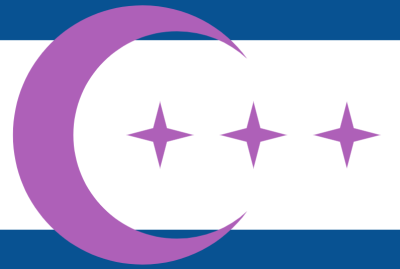
"Under the Three, United As One"
General Information
| Capital | Viera |
|---|---|
| Largest City | Viera |
| ---- | ---- |
| Official Language | Ponraigne |
| Demonym | Luneise |
Government
| Classification | Unitary Absolute Monarchy |
|---|
- Government:
- King Florian Gauthier
Formation
| Gauthier Dynasty Establishment | 768 AD |
|---|---|
| Independence from the Republic | 1920 AD |
Other Information
- Population (2020 Estimate): 124,580
- GDP(nominal): Unmeasured
- Currency: Pavires
- Timezone: SCT
- Calling code: +482
- Internet TLD: .lun
Overview
The Confederation of Les Lunes is a microstate on the Meridas island of Glestonoph. The small nation is located on a peninsula into the Southern Ocean, with its western border with The Grand Royal Crown being defined by Mount Montsemillie. It’s capital is Viera, with a population of 63 thousand. The nation is largely composed of the Viera-Cadroix metropolitan area, with the remainder devoted to agricultural villages.
The native Ponraigne people were often subjugated by neighboring states, and it wasn’t until King Claude Gauthier I in 768 that the Ponraigne gained independence. The Gauthier dynasty was largely isolated from the rest of Meridas due to Mount Montsemillie. The Gauthier dynasty was notable for surrendering to Kkhano forces peacefully in 1864, and abstaining from the War of the Third Coalition. Les Lunes was given to the Crown following the war, and King Fabien II led a successful revolution in 1920 which met no resistance from the new nation. Since then, Les Lunes has engaged in a policy of “Isolated Neutrality” and rarely interacted with global powers.
Luneise agricultural products like wines and cheeses are often regarded as luxuries in foreign nations. The nation hosts large rare earth mineral and oil reserves, yet lags in industrial and technological development. The country is internationally recognized as impoverished, but Viera remains a popular tourist destination for the global elite due to King Florian Gauthier's lavish parties.
Etymology
Les Lunes originated from the Ponraigne legend of three moon shards falling into Lake Averogne to produce the crown of King Claude Gauthier I. Translated directly, it means “the moons” The fabled crown is stored in the Royal Museum in Viera.
History
The area of modern day Les Lunes was settled shortly after the rest of Meridas by the first Meridasi in early pre-history. These settlers developed their own culture that diverged heavily from the rest of Meridas due to the relative geographic isolation of the region. Due to this isolation, the culture and language of the Ponraigne was unaffected by the Second and Third waves of migration to Meridas. The Ponraigne were subjugated by the petty kingdoms and empires formed by other Meridasi cultures until 786, when King Claude Gauthier I led the a rebellion in Viera, dubbed the First Ponraigne Revolt. Unable to suppress the revolt due to ongoing conflicts in the east, the Meridasi conceded the territory west of the Chanilles mountains to the new Kingdom of Les Lunes.
For the next millenia, Les Lunes avoided the conflicts plaguing the rest of Meridas due to its geographic position. While the port of Viera was largely ignored by the Fengese and Svarizians in favor of The Crown to the north, many Orthodox Missionaries from Praefectus traveled to Les Lunes. The country eventually converted to Orthodoxy by order of the monarchy in 1044. Luneise artists were supported by the monarchy, and their art was popularised by Meridasi merchants in The Crown. The reputation of Luneise artists continued into the 19th century, when artistic movments diversified and led to the creation of Impressionism in Les Lunes shortly before the rise of the empire of Kkhano.
Les Lunes surrendered peacefully to the Kkhanoese, and was integrated into the Meridasi Colony in 1864. Under the Kkhano and Meridasi collaborators, most Ponraigne lived in squalor as the majority of resources were given to the Kkhanoese war machine. Les Lunes, lacking any semblance of national leadership, abstained from the war of the third coalition. During their time under the revolutionary government of Meridas, and later the Royal Crown Republic, the Ponraigne were subjected to cultural assimilation programs that sought to exterminate the Ponraigne identity and language. These policies led to King Fabien II coming out against the Meridasi government and leading the Second Ponraigne Revolt, who liberated Les Lunes in 1920. The scars of the occupation remain to this day, leading to the countries isolationist stance and high levels of poverty.
Geography
Les Lunes is one of the smallest countries in Northern Utopia, and one of the most isolated. The beaches of Les Lunes are renowned for their beauty and warm waters. The western border along Mount. Montsemillie is part of the larger Chanilles mountain range that spans Meridas. Les Lunes is composed near entirely of fertile grasslands, with hilly terrain becoming more prevalent near Mount Montsemillie.
Les Lunes experiences moderate summers and winters, with moderate precipitation. The largest biome in Les Lunes is urban terrain or agriculture development. Under 30% of land in Les Lunes is undeveloped, native prairies or forests. Lake Averogne is the sole body of freshwater and the only protected natural area in Les Lunes.
Demographics
Les Lunes is largely made up of ethnic Ponraigne citizens, with a sizable minority of Meridasi. Much of the nation practices Christianity due to royal policies.
Population
The Les Lunes population is estimated to be 124,580 with a high fertility rate of 3.74. Poor conditions in Les Lunes have resulted in very low populations of migrants. International estimates suggest a migrant population numbering around 1,700.
Language
Ponraigne is the national language of Les Lunes. Ponraigne is part of the Chanillese language tree, of which only Ponraigne is still spoken. Due to the limited number of native speakers and unusual grammatical structure, combined with the lack of any language relatives, Ponraigne speakers are isolated linguistically from other Northern Utopians.
Religion
Christianity is the official religion of Les Lunes, and nearly all citizens identify as Christian. The Luneise Church follows Praefectian and Meridas doctrine, and religious figures such as the King and Metropolitan Archbishop of Les Lunes frequently travel to Constantinus and The Crown. Church attendance in Les Lunes is high and often viewed as a requirement by most Luneise communities. Native Ponraigne faiths retain a cultural significance to Luneise citizens, but are rarely practiced. The Knight Commander of the Orthodox Church of Meridas, Alexendre Gauthier, is the uncle of current King Florian Gauthier.
Education
Les Lunes has a very poor education system, maintaining few state schools and supporting private, religious schools for most children. Only two universities exist in the nation, so many students pay for education through Commonwealth online institutions. Just 7% of Lunesie citizens hold a degree from a higher education institution.
Politics
The Confederation of Les Lunes is an unitary, absolute monarchy led by the Gauthier dynasty. The nation was founded by the Treaty of Cadroix between Cadroix and Viera to support King Claude Gauthier I’s rule, and to this day the agreement between the two cities has served as the justification for the Gauthier dynasty’s power. The king and his royal cabinet are the sole legislative and executive authority in the nation. Royal power is passed from the King to the closest related living male heir, and in situations where no male relatives are alive the King’s closest female relative takes power until a male is born.
The city councils of Viera and Cadroix are both primarily composed of royal appointments, with 7 of 10 seats in each city being appointed by the King of Les Lunes. Of the remaining three seats, one is given to the Church of Les Lunes, and the remaining two are elected positions by the citizens of each town. There are no terms for a council seat so each seat is only appointed whenever the current council member retires.
Military
The Military of Les Lunes contains two branches, the Royal Guard and the Royal Navy. Both are small volunteer forces with only a few hundred men. Women are excluded from both branches of the military. Historically the Royal Guard and Royal Navy served as deterrents against Meridasi nations seeking to invade Les Lunes, but in modern times the Royal Guard serves more as a police force, while the Royal Navy oversees the ports of Viera.
Economy
Luneise economy is largely run by private corporations managed by the Gauthier dynasty. These corporations are funded by the personal wealth of the Gauthier dynasty and are the only Luneise groups approved to operate outside of Les Lunes. Wealth is extremely split in Les Lunes, with the majority of the population falling below the poverty line. There is a small wealthy elite that controls most of the business, known locally as ‘the Five Families’. Other than agricultural products, the nation has a high mineral and oil wealth that provides the main source of income for the Royal Family. Tourism is the leading industry, followed by oil and agriculture.
Infrastructure
Les Lunes’ notably lags behind other nations. There are very few paved roads outside of the Viera-Cadroix metropolitan area, and no public transportation. There is only one airport, King Fabien Royal Airport, which is closed to the public. The water system is often ranked as one of the poorest in the world, testing high in levels of lead and other toxins. Internet access is low, and often restricted by the monarchy.
Energy
The Luneise energy grid operates almost entirely off of domestically produced oil and coal. Despite the large amounts of oil produced, poor infrastructure often leads to the energy grid failing. Many homes will have their own generators to avoid loss of power.
Culture
Les Lunes has a deep cultural history, and many Luneise artists and composers have been among the most renowned of their time. Historically, Luneise culture diverged significantly from other nations due to different language and traditions. Many historians point to King Albert II’s creation of the Museum of Luneise Culture in 1532 as a reason for the nation’s rich art history.
Native Ponraigne traditions taught of a deep connection with the sea and sky, and these elements are mirrored in the art of pre-Christian Les Lunes. Following the expansion of Christianity to Les Lunes, art focused much more on depicting history and religion instead of the natural world. By the late 1800s, art turned against the realistic depictions of the world and focused much more on the serenity of Luneise life, and this impressionist style remains the most common in Les Lunes today. Under the occupation of Kkhano and the Meridasi Colony, artists turned to surrealist depictions of the brutality around them. This controversial art movement influenced much of the world's response to the post-third coalition conflicts.
Luneise cinema is regularly heralded as groundbreaking for its artistic approach to filmmaking. Luneise directors established visionary techniques in the early 1920’s that established Les Lunes as a center for the industry. The Luneise Filmmakers Academy holds a yearly awards show known as the LFAA.
Provide by ArsonistGlaceon(User)